

Introduction
The race to dominate artificial intelligence has accelerated rapidly, with 2026 shaping up to be a defining year for businesses and technology leaders alike. What began as experimentation with chatbots and automation has evolved into full-scale adoption of AI platforms for enterprises, influencing everything from operations to customer engagement.
Today, organisations are no longer asking whether to adopt AI, but rather which solution offers the most value. With several major players competing for dominance, choosing between platforms has become increasingly complex. This is where a clear generative AI software comparison becomes essential.
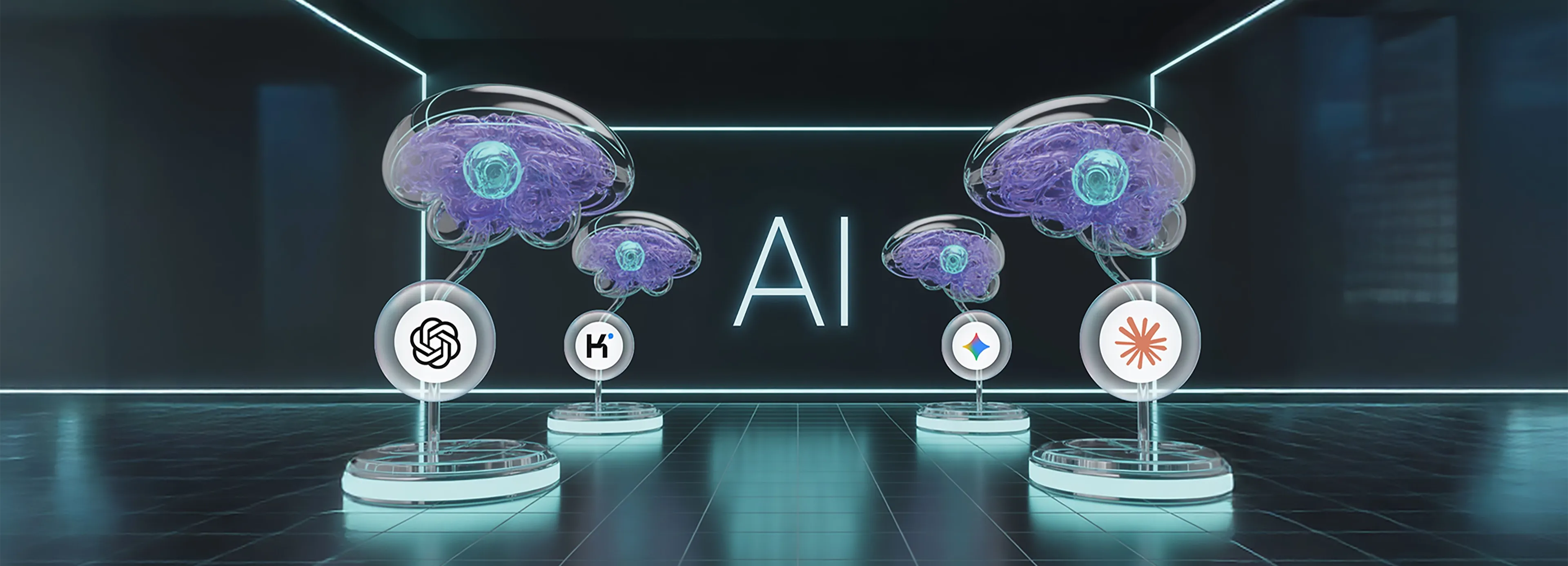
In this guide, we explore the best AI platforms 2026, focusing on four key contenders: ChatGPT, Claude, Gemini, and Kimi K2.5. Through a structured large language model comparison, we examine their strengths, limitations, and suitability for different business needs—helping you determine the best AI for companies in an increasingly competitive landscape.
The AI Landscape in 2026
Artificial intelligence in 2026 is no longer a standalone tool. It is deeply embedded into business infrastructure, powering decision-making, automation, and customer experiences. The rise of AI tools for business 2026 reflects a shift towards integrated ecosystems where AI supports both strategic and operational functions.
Several trends define the current landscape.
First, AI productivity tools have become standard across workplaces. From drafting reports to analysing data, AI is enhancing efficiency at every level. Employees are increasingly working alongside AI, not just using it occasionally.
Second, AI automation tools are transforming workflows. Repetitive processes, such as data entry, customer service responses, and internal reporting, are now automated, freeing teams to focus on higher-value tasks. This has made AI a key driver of operational efficiency.
Third, organisations are adopting structured AI implementation strategy frameworks. Rather than deploying AI in isolated use cases, businesses are integrating it across departments, aligning it with long-term digital transformation goals.
Finally, the rise of emerging AI platforms is intensifying competition. While established players continue to innovate, newer entrants are challenging the market with advanced capabilities, competitive pricing, and unique technological approaches.
Against this backdrop, understanding how the leading platforms compare is critical.
Meet the Contenders: The Top Generative AI Platforms
The current market is dominated by four major players, each offering distinct advantages within the category of top generative AI platforms.
ChatGPT (OpenAI)
Developed by OpenAI, ChatGPT remains one of the most widely adopted AI systems globally. Known for its versatility, it supports a wide range of applications, from content creation to AI for software development.
Its ecosystem includes APIs, enterprise-grade solutions, and integrations that make it a strong contender in any enterprise AI comparison. ChatGPT is often seen as a benchmark in discussions such as Claude vs ChatGPT and Gemini vs ChatGPT.
Claude (Anthropic)
Claude, developed by Anthropic, is recognised for its focus on safety, reliability, and long-context reasoning. It is particularly well-suited for enterprise environments that prioritise governance and compliance.
In the ongoing Claude vs ChatGPT debate, Claude often stands out for handling complex documents and maintaining consistent outputs over extended interactions.
Gemini (Google DeepMind)
Gemini, created by Google DeepMind, leverages Google's ecosystem to deliver powerful multimodal capabilities. Its integration with productivity tools and cloud infrastructure makes it a natural choice for organisations already embedded in the Google ecosystem.
Comparisons such as Gemini vs ChatGPT often centre on ecosystem advantages and real-time data capabilities.
Kimi K2.5 (Moonshot AI)
Kimi K2.5, developed by Moonshot AI, represents a new wave of competition. As part of the growing category of emerging AI platforms, it has gained attention for its strong reasoning capabilities and large context window.
A growing number of businesses are exploring Kimi K2.5 vs ChatGPT, particularly in scenarios requiring deep document analysis and cost efficiency. This has led to increased interest in Kimi AI review discussions across the industry.
Platform Comparison: Core Features & Capabilities
When evaluating the best AI platforms 2026, understanding how each contender performs across core capabilities is essential. Businesses need to consider not only raw performance but also practical applications such as AI for software development, AI for marketing automation, and broader AI automation tools. Below is a detailed large language model comparison of ChatGPT, Claude, Gemini, and Kimi K2.5, highlighting reasoning, context handling, technical capabilities, and productivity support.
Feature |
ChatGPT |
Claude |
Gemini |
Kimi K2.5 |
|---|---|---|---|---|
Reasoning & Accuracy |
Versatile; reliable for technical & creative tasks |
Safety-focused; excels in complex documents |
Strong with Google ecosystem; good real-time reasoning |
High-performance; great for multi-step problems |
Context & Memory |
Moderate; may need chunking for long docs |
Very large; ideal for compliance-heavy workflows |
Moderate-long; integrates with cloud for continuity |
Large; handles extended documents efficiently |
Coding & Technical Tasks |
Leading for AI for software development; mature tooling |
Adequate; better for structured reasoning |
Good; integrates with cloud pipelines |
Strong reasoning; cost-effective for large-scale technical tasks |
Multimodal Capabilities |
Text-based; some plugin/API support |
Text-focused; prioritises structured output |
Advanced; text + images + data (AI productivity tools) |
Mainly text; improving multimodal support |
Marketing & Productivity Tools |
Flexible integration; content & workflow automation |
Strong for content strategy & analysis |
Seamless with Google Workspace; excels in AI for marketing automation |
Efficient & cost-effective for reports, content, and workflows(emerging AI platforms) |
Key Takeaways
ChatGPT remains a benchmark in versatility, AI productivity tools, and ecosystem maturity, often used as a reference in Claude vs ChatGPT and Gemini vs ChatGPT comparisons.
Claude shines in safety, long-context reasoning, and regulated environments, making it a strong choice in enterprise AI comparisons.
Gemini excels in AI for marketing automation and productivity through deep integration with Google's ecosystem.
Kimi K2.5, discussed in numerous Kimi AI review pieces, is emerging as a high-performance alternative with large-context processing and cost efficiency, ideal for companies seeking scalable AI tools for business 2026.
This generative AI software comparison demonstrates that no single platform is universally superior. The best choice depends on your organisation's priorities, whether that's ecosystem integration, compliance, technical performance, or overall versatility. For enterprises building a long-term AI implementation strategy, combining insights from OpenAI vs Moonshot AI and understanding the capabilities of AI platforms for enterprises is critical for success.
Enterprise Considerations
Choosing the best AI for companies in 2026 involves more than comparing features. Enterprises must evaluate how platforms perform in real-world settings, including scalability, governance, integration, and total cost of ownership. This is where a thorough enterprise AI comparison becomes essential.
Enterprise Consideration |
ChatGPT |
Claude |
Gemini |
Kimi K2.5 |
|---|---|---|---|---|
Scalability & Integration |
Mature ecosystem; robust APIs; ideal for large-scale deployment |
Moderate; best for structured workflows and compliance-heavy environments |
Strong; seamless with Google Workspace and cloud infrastructure |
High; cost-effective scaling; ideal for long-context processing |
Governance & Compliance |
Broad enterprise adoption; trusted frameworks |
Safety-focused; excellent for regulated sectors and long-form content |
Compliance suited to Google ecosystem; regional regulations considered |
Emerging platform; growing compliance features; suitable for flexible deployments |
Productivity & Automation |
Supports AI productivity tools and AI automation tools across technical & non-technical tasks |
Structured reasoning; strong for enterprise knowledge and documentation |
Excels in AI for marketing automation and workflow integration |
Efficient automation for reporting, document processing, and internal knowledge |
Cost & Accessibility |
Enterprise-grade solutions; pricing may be high at scale |
Moderate; cost justified by compliance and safety features |
Enterprise-level; may require higher investment for full suite |
Competitive pricing; high-performance alternative among emerging AI platforms |
Best Use Cases |
AI for software development, content generation, general enterprise AI |
Documentation-heavy tasks, regulated workflows, long-context reasoning |
Marketing automation, analytics, productivity integration |
Scalable automation, long-context reasoning, cost-sensitive enterprise workflows |
Key Takeaways
A strategic approach to AI platforms for enterprises should consider:
Alignment with business objectives and workflows
Integration into existing IT infrastructure
Governance, compliance, and risk mitigation
Cost efficiency and scalability
Support for both AI for marketing automation and AI for software development
By evaluating these factors in addition to core capabilities, organisations can select the platform that delivers the most value and supports a long-term AI implementation strategy. This ensures that AI adoption is both sustainable and impactful.
Head-to-Head Matchups
To evaluate the best AI platforms 2026, businesses often compare leading solutions directly. This section highlights key match-ups, ChatGPT vs Claude vs Gemini vs Kimi, focusing on performance, usability, and enterprise readiness. These insights support a strategic enterprise AI comparison and guide organisations in selecting the right AI platforms for enterprises.
Matchup |
Strengths |
Considerations |
Best Use Cases |
|---|---|---|---|
ChatGPT vs Claude |
ChatGPT: versatile, mature ecosystem, strong AI for software development & AI productivity tools. Claude: safety-focused, long-context reasoning, ideal for compliance-heavy workflows. |
ChatGPT may require more oversight in regulated sectors; Claude may lack broader ecosystem integrations. |
Content generation, code assistance, structured documentation, regulated industries. |
Gemini vs ChatGPT |
Gemini: seamless integration with Google Workspace, strong AI for marketing automation, multimodal capabilities. ChatGPT: broader versatility, developer-friendly APIs. |
Gemini excels in Google-centric environments; ChatGPT offers more flexible deployment across multiple systems. |
Marketing automation, analytics, productivity workflows, cross-platform AI tools for business 2026. |
Kimi K2.5 vs ChatGPT |
Kimi K2.5: high-performance reasoning, extended context handling, cost-effective. ChatGPT: mature ecosystem, reliable outputs, developer-friendly. |
Kimi is emerging; may lack some integrations compared to ChatGPT. |
Complex document analysis, multi-step reasoning tasks, scalable automation, emerging AI platforms trials. |
OpenAI vs Moonshot AI |
OpenAI: established enterprise adoption, broad APIs, strong ecosystem. Moonshot AI (Kimi K2.5): innovative, competitive performance, flexible deployment. |
OpenAI dominates in stability and enterprise trust; Moonshot AI is still growing but offers strong technical advantages. |
Long-term AI implementation strategy, AI automation tools, multi-department enterprise deployment, experimentation with top generative AI platforms. |
Key Takeaways
No universal winner: Choice depends on business priorities, workflows, and ecosystem alignment.
ChatGPT remains a benchmark in versatility, AI for software development, and cross-platform integration.
Claude is ideal for enterprises that prioritise safety, structured reasoning, and compliance.
Gemini excels in AI for marketing automation, productivity tools, and Google-centric workflows.
Kimi K2.5, as discussed in numerous Kimi AI review articles, is a high-performance emerging contender suitable for long-context reasoning and cost-sensitive enterprises.
Comparing OpenAI vs Moonshot AI illustrates the broader market dynamic: established platforms offer stability, while emerging AI platforms like Kimi K2.5 push technical boundaries.
For a successful enterprise AI comparison, organisations should evaluate scalability, governance, productivity, and integration to ensure AI adoption supports a long-term AI implementation strategy.
Choosing the Best AI Platform for Your Business
Selecting the right AI platform requires more than evaluating raw performance. Enterprises must balance capability, ecosystem integration, cost, and long-term strategy. This section distils the best AI platforms 2026 into practical guidance for organisations seeking to implement AI tools for business 2026 and build a sustainable AI implementation strategy.
Platform |
Strengths |
Ideal For |
Considerations |
|---|---|---|---|
ChatGPT (OpenAI) |
Versatile across AI for software development, content generation, and AI productivity tools; mature APIs and ecosystem |
Enterprises seeking cross-platform flexibility and broad use cases |
May require additional oversight for regulated sectors |
Claude (Anthropic) |
Safety-focused, structured reasoning, long-context handling; strong in Claude vs ChatGPT comparisons |
Regulated industries, compliance-heavy workflows, documentation-intensive tasks |
Limited ecosystem integrations compared to ChatGPT |
Gemini (Google DeepMind) |
Advanced multimodal capabilities; integrated with Google Workspace; strong AI for marketing automation |
Organisations using Google ecosystem; marketing, analytics, and productivity workflows |
Best performance within Google-centric infrastructure |
Kimi K2.5 (Moonshot AI) |
High-performance reasoning, extended context window, cost-effective; emerging AI platforms contender(Kimi AI review) |
Complex analysis, multi-step reasoning, scalable automation, experimental enterprise projects |
Fewer integrations; still emerging in enterprise adoption |
Key Takeaways
ChatGPT vs Claude vs Gemini vs Kimi: Each platform offers unique advantages; selection depends on business priorities and workflow alignment.
Kimi K2.5 vs ChatGPT: Kimi K2.5 is a high-performance, cost-effective challenger; ChatGPT remains the reliable, versatile enterprise choice.
Enterprise AI comparison should consider scalability, governance, productivity, and integration to ensure AI adoption drives measurable value.
OpenAI vs Moonshot AI illustrates market dynamics: established platforms provide ecosystem stability, while emerging AI platforms push technical innovation.
Top generative AI platforms now support both operational and strategic needs, including AI for software development, AI automation tools, and AI productivity tools.
Choosing the best AI for companies requires a balance of performance, ecosystem fit, cost, and alignment with a long-term AI implementation strategy.
Who Leads the AI Race in 2026
The competition among ChatGPT, Claude, Gemini, and Kimi K2.5 shows that the best AI platforms 2026 are defined not just by technical performance, but by how well they align with enterprise needs.
ChatGPT remains versatile, supporting AI for software development and AI productivity tools across multiple industries. Claude stands out for safety, structured reasoning, and compliance. Gemini excels in AI for marketing automation and seamless Google ecosystem integration. Kimi K2.5, highlighted in Kimi AI review discussions, offers high-performance reasoning and scalable automation as an emerging AI platform.
Ultimately, the winner in 2026 is the enterprise that chooses the right platform for its workflows, balances ecosystem integration with performance, and implements a strategic AI implementation strategy. Whether for AI automation tools, productivity, or specialised applications, success comes from using these platforms to create real business impact rather than relying on benchmarks alone.
How Trinergy Digital Supports Your AI Journey
Navigating the rapidly evolving world of AI can be complex. This is where Trinergy Digital steps in. As a Malaysia-based creative tech agency, Trinergy Digital helps businesses evaluate, implement, and optimise AI platforms for enterprises.
From integrating AI automation tools and AI productivity tools to customising solutions for AI for software development and AI for marketing automation, Trinergy Digital ensures that your AI adoption aligns with your broader AI implementation strategy.
By combining strategic guidance, technical expertise, and hands-on support, Trinergy Digital empowers companies to leverage the best AI platforms 2026 effectively, transforming technology investment into measurable business impact. Contact Trinergy Digital today to start your AI journey and turn adoption into measurable business impact.