



Introduction
Every business, whether a startup or a well-established company, relies on a clear plan for generating income. This plan is often referred to as a revenue model. Understanding what a revenue model is is essential for founders, managers and software developers alike because it influences how a business earns money and sustains growth.
In simple terms, a revenue model meaning is the method or strategy a company uses to generate revenue from its products or services. It answers key questions such as how do software companies make money or how a startup can monetise its offerings effectively.
For software businesses, selecting the right model is particularly critical. Software development projects, especially those that start with an MVP (minimum viable product), rely heavily on an effective software revenue model to validate product ideas and attract early users. In this article, we explore common business revenue models, provide revenue model examples, and guide you on choosing the right approach for your company.
Understanding Revenue Models
A revenue generation model is more than just pricing. It defines how your business captures value from customers and converts it into income. While the terms earning model and revenue model are often used interchangeably, the revenue model focuses specifically on the strategy for income rather than broader financial planning.
For instance, a sales revenue model depends on selling products or services directly, whereas a subscription-based model generates recurring revenue. Both are valid approaches, but each has distinct operational and marketing implications.
Startups, especially those in the tech and software sectors, often experiment with multiple software pricing strategies to identify the most effective revenue streams. This might involve comparing free trial conversions, premium subscription adoption, or pay-per-use services.
Types of Revenue Models
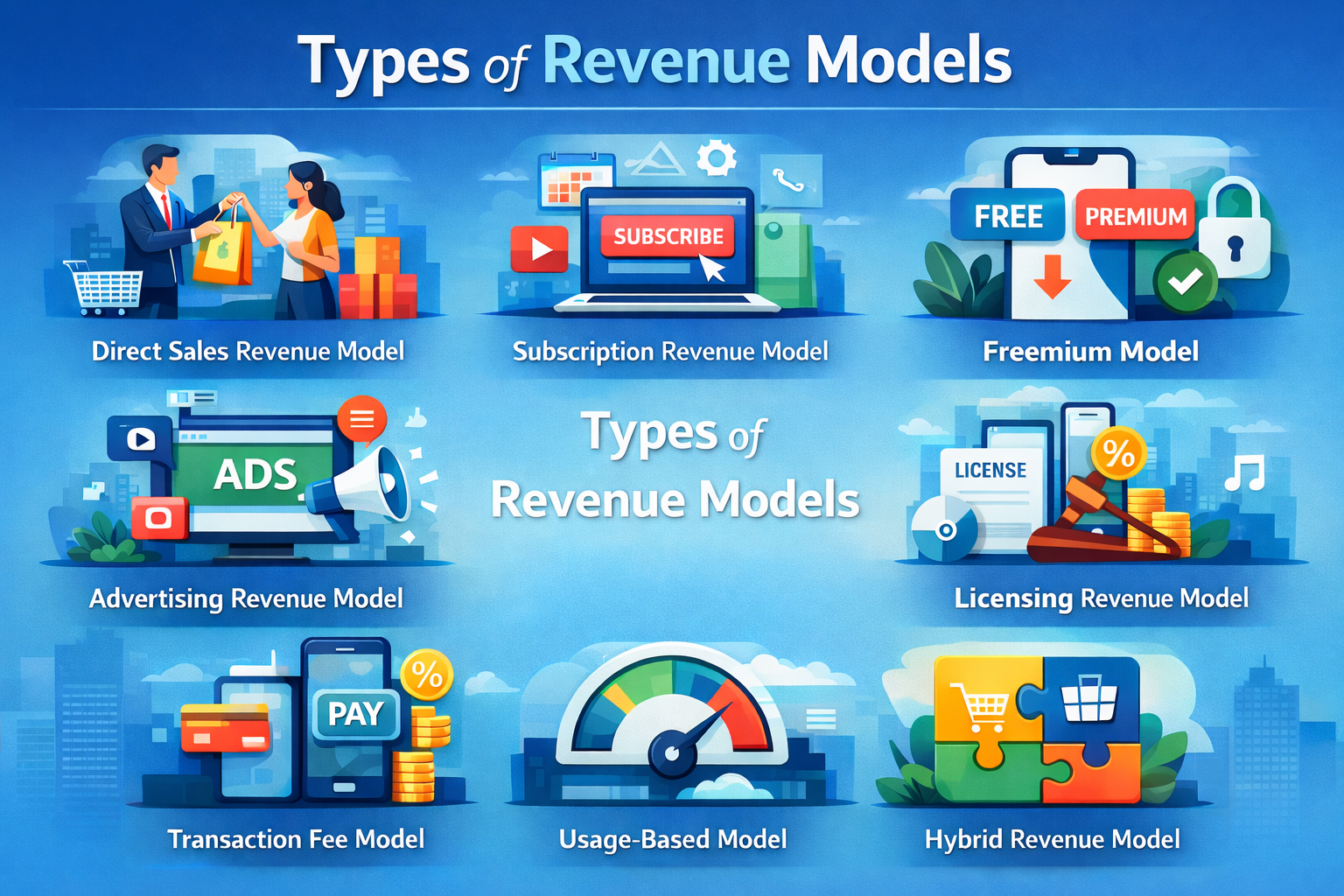
Businesses can adopt various revenue models depending on their industry, product, and market. Some of the most common include:
Direct Sales Revenue Model
This is the most straightforward approach, where revenue comes from selling a product or service directly to the customer. It is common in retail, B2B software, and consumer goods.Subscription Revenue Model
Popular among SaaS providers, a saas revenue model charges customers recurring fees for access to software or services. This ensures predictable revenue and supports long-term customer relationships.Freemium Model
Companies offer a basic product for free and charge for premium features. This approach is popular in mobile apps and software, allowing users to experience value before committing financially.Advertising Revenue Model
Revenue is generated by offering free content supported by advertisements. Platforms such as social media or media outlets commonly use this model.Licensing Revenue Model
This involves selling the rights to use intellectual property, including software. Licensing can be a one-time fee or an ongoing royalty arrangement.Transaction Fee Model
Here, the business earns a fee for each transaction processed. This model is widely used in online marketplaces and payment gateways.Usage-Based Model
Also known as pay-as-you-go, this model charges customers based on how much they use a service. Cloud computing and API providers often use this software revenue model.Hybrid Revenue Model
Many businesses combine multiple approaches, such as offering subscriptions with premium add-ons or integrating ads with freemium software.
Revenue Model Examples
Understanding revenue model examples can clarify how these strategies work in practice:
Software-as-a-Service (SaaS) platforms such as productivity tools charge monthly or annual subscriptions, a classic saas revenue model.
E-commerce businesses like online marketplaces use a sales revenue model or transaction fee model to earn per sale.
Mobile apps may adopt freemium models with in-app purchases to convert free users into paying customers.
Software licensing is common for enterprise solutions, where companies pay for rights to use software internally.
Startups often test multiple startup revenue models during MVP development to identify the most profitable approach. For example, an MVP (minimum viable product) might initially be offered free to attract users while the company experiments with software pricing strategies.
By studying these examples, you can see how different models align with business objectives. Software businesses in particular must weigh scalability, customer adoption, and lifetime value when choosing the right revenue approach.
How to Choose the Right Revenue Model
Selecting the right revenue model is crucial for sustainable growth, especially for software businesses and startups. The choice affects pricing, marketing, and product development. Here's a step-by-step guide to help you decide:
Understand Your Target Market
Your customers' behaviour and willingness to pay largely determine the appropriate model. For example, enterprise clients may prefer software licensing with annual contracts, while individual users might opt for a freemium or subscription model.Define Your Value Proposition
Ask what is a revenue model that aligns with the value you deliver. If your software offers continuous updates and support, a saas revenue model or subscription-based earning model may be ideal.Consider Cash Flow Needs
Startups often operate on limited budgets. A sales revenue model generates immediate income, while subscription or freemium models can delay full monetisation but provide predictable long-term revenue.Evaluate Scalability
Scalability is key for software and tech companies. A usage-based revenue model or saas revenue model scales easily with more users without significant additional costs, unlike direct sales models.Experiment During MVP Stage
For new software projects, testing models during the minimum viable product phase is essential. Using the MVP full form in project context, startups can trial software pricing strategies with a small user base before committing fully.Analyse Competitors
Understanding competitors' business revenue models helps you position your software effectively. For example, if most competitors use a subscription approach, a freemium model with premium features could differentiate your offering.Factor in Long-Term Goals
Your revenue model should align with growth objectives. A startup revenue model may initially prioritise user acquisition, while a mature business may focus on maximising profitability through sales revenue models or advanced software pricing strategies.
Best Practices for Software Revenue Models
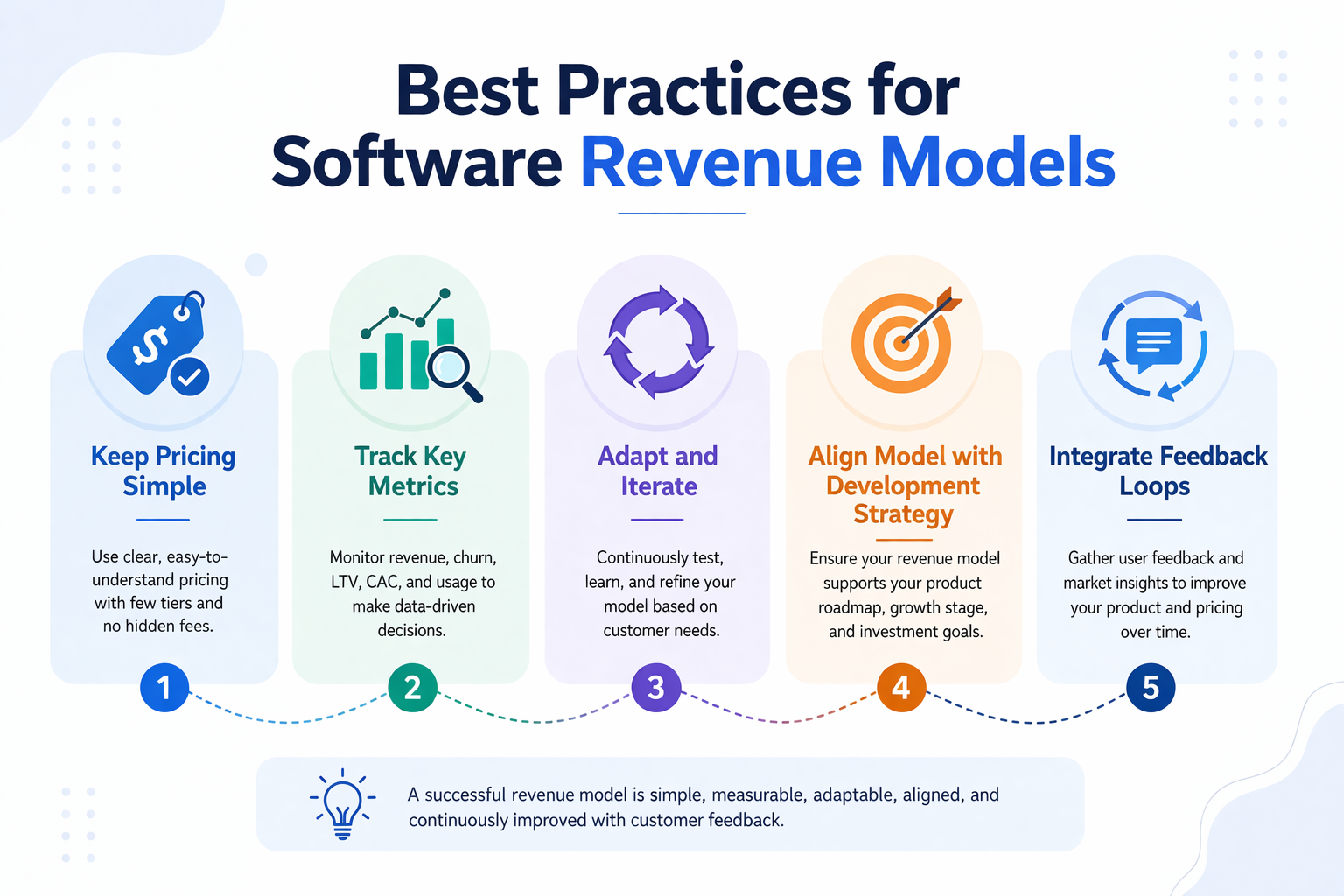
Software companies face unique challenges in choosing and implementing revenue models. Here are key best practices:
Keep Pricing Simple
Complex pricing plans can confuse customers. Clear tiers or usage-based pricing help users understand the value of your software.Track Key Metrics
Measure customer acquisition cost (CAC), lifetime value (LTV), churn rate, and conversion rates. These metrics guide decisions on software revenue models and adjustments to pricing models for software.Adapt and Iterate
Market conditions and user behaviour change over time. Regularly revisit your earning model and adjust pricing or features as needed.Align Model with Development Strategy
Your software development roadmap should support your revenue model. For instance, a saas revenue model requires ongoing updates and customer support, whereas a transaction fee model demands robust payment processing capabilities.Integrate Feedback Loops
Use user feedback from your MVP to refine your software pricing strategies and revenue generation model. This approach reduces risk and increases adoption rates.
Common Mistakes to Avoid
Many businesses fail to maximise revenue due to model-related missteps. Avoid these common errors:
Choosing a Model Too Early
Committing to a single revenue model before testing your MVP can lead to missed opportunities.Ignoring Market Research
Failing to study customer behaviour or competitors can result in pricing that is too high or too low.Overcomplicating Pricing
Confusing or hidden fees can drive customers away, particularly for software subscription models.Neglecting Flexibility
The wrong startup revenue model can hinder pivoting or scaling. Hybrid approaches often offer more flexibility.Focusing Only on Revenue
Revenue is important, but customer satisfaction and retention are equally critical for sustainable growth.
Future Trends in Revenue Models
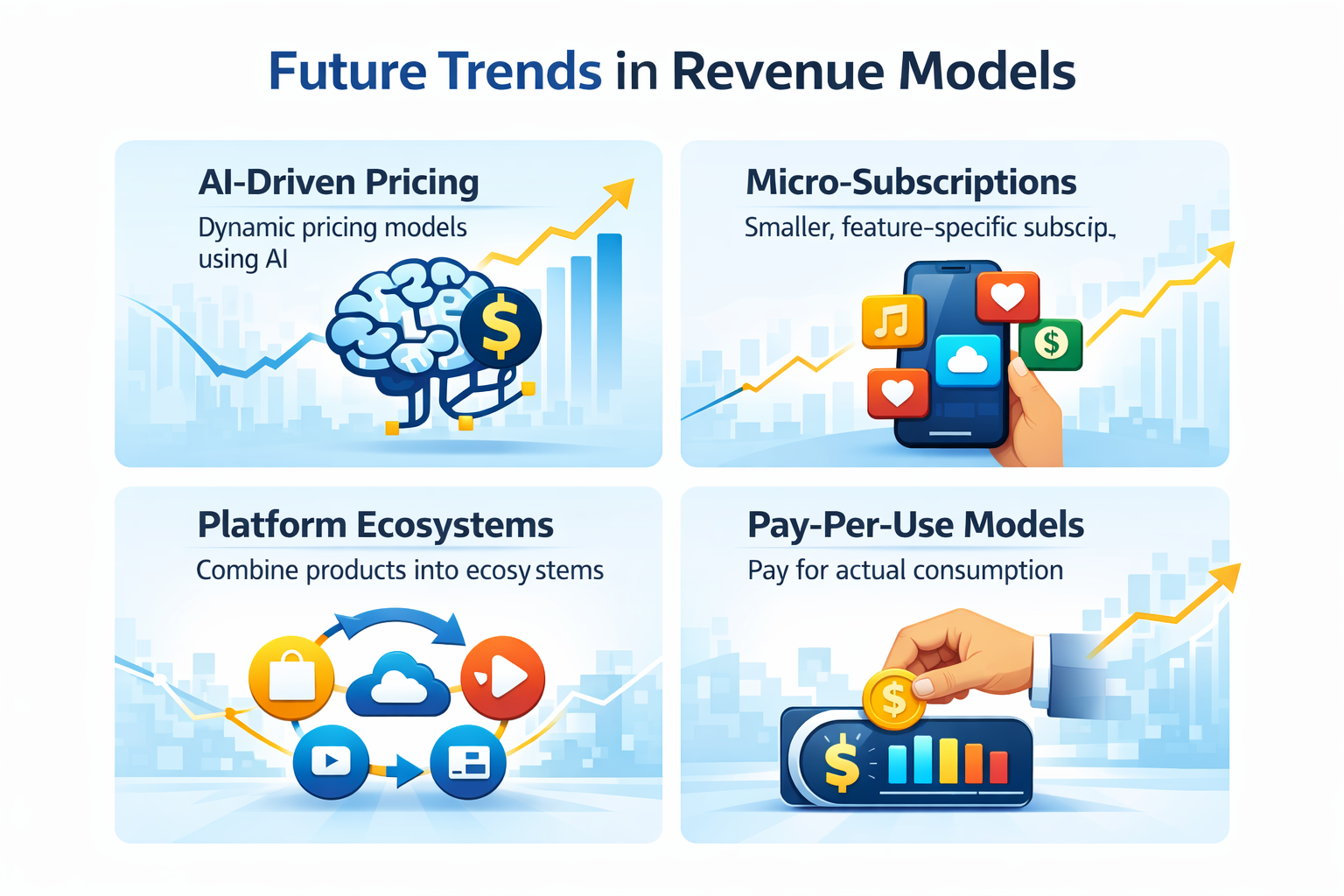
The software industry continues to evolve, and so do revenue generation models. Key trends include:
AI-Driven Pricing
Dynamic pricing models using AI can optimise revenue in real time, adjusting based on usage patterns or market demand.Micro-Subscriptions
Smaller, feature-specific subscriptions allow users to pay for what they actually use, enhancing adoption.Platform Ecosystems
Companies increasingly combine products into ecosystems, generating revenue through integrated services, in-app purchases, and partner collaborations.Pay-Per-Use Models
Especially relevant for cloud services and APIs, this software revenue model ensures customers pay for actual consumption rather than flat fees.
Trinergy Digital Insight
Choosing the right revenue model requires understanding both your customers and your product's value. Whether you are exploring pricing models for software, a saas revenue model, or a startup revenue model, a well-structured approach improves profitability and scalability. By testing different software pricing strategies during the MVP stage, monitoring key metrics, and iterating based on user behaviour, you can establish a sustainable revenue generation model tailored to your business.
At Trinergy Digital, we help software companies and startups design and implement the optimal revenue strategy, ensuring your software development efforts translate into measurable growth. Contact us to discuss your business model and maximise your revenue potential.