



Introduction
In today's fast-paced digital landscape, businesses need systems that grow alongside their ambitions. Whether you are building an enterprise software solution or a consumer-facing app, understanding scalability is essential. But what exactly does scalability mean, and why should it be a priority in your business strategy?
At its core, scalability refers to a system's ability to handle increased demand without compromising performance or reliability. In practical terms, it ensures that as more users access your product, your software, backend, and frontend systems can cope seamlessly. For companies investing in web app development or native mobile app development, scalability is a critical factor in sustaining long-term growth.
Many businesses underestimate the impact of scalability during the application development life cycle. They focus on creating a functional product but overlook the infrastructure needed to support rapid growth. This oversight can lead to system crashes, poor user experiences, and ultimately, a negative effect on your business revenue model.
What Scalability Means for Your Business
When you ask, what is scalability, it is helpful to think beyond technology. Scalability is not just a technical concept; it is a business strategy. A scalable system allows your operations to expand efficiently. For example, if your online platform suddenly experiences a surge in traffic, a scalable system can accommodate this growth without requiring a complete redesign.
The benefits are clear: a scalable system supports a reliable customer experience, protects your brand reputation, and allows your team to focus on innovation rather than firefighting performance issues. It also influences your revenue model. Companies with scalable applications can handle larger markets, launch new features quickly, and adopt new business models with minimal friction.
Scalability is particularly crucial in digital transformation initiatives. As businesses transition from traditional processes to digital-first operations, having software that scales ensures that investments in technology generate sustainable returns. Whether you are implementing an enterprise software solution or designing a customer-facing mobile application, scalability affects both operational efficiency and the long-term viability of your digital strategy.
Scalability in Software Development
In the context of software development, scalability touches every stage of the app development lifecycle. During the application development life cycle, developers must consider how the system will perform as it grows. This includes both the frontend that users interact with and the backend that handles data, processing, and integrations.
For web app development, scalability involves optimising server resources, managing database growth, and ensuring smooth content delivery across multiple regions. In native mobile app development, developers must account for device diversity, network variability, and user behaviour patterns. Planning for scalability early in the software development process reduces the risk of costly refactoring later and improves the overall performance of your application.
A scalable application also requires attention to software security. Secure applications must maintain strong protection against threats even as user numbers grow. Scalability and security often intersect when designing backend architectures, ensuring that authentication, data storage, and access controls remain robust under increased load.
Microservices and Cloud Architecture
One of the most effective ways to achieve scalability is through modern architectural patterns. The microservice architecture advantages make it a popular choice for businesses seeking scalable solutions. By breaking an application into independent services, each component can be scaled individually based on demand. This flexibility not only improves performance but also simplifies maintenance and updates. According to Microsoft on Cloud Scalability, cloud architecture allows applications to adjust resources dynamically, keeping systems responsive under growing demand.
The advantages of microservices extend to both development and business outcomes. Developers can deploy features faster, isolate failures to specific components, and integrate new technologies without disrupting the entire system. From a business perspective, microservices enable a more resilient revenue model by supporting incremental growth and rapid adaptation to market changes.
Cloud architecture further complements microservices by offering elastic resources. Companies no longer need to over-invest in physical servers or worry about peak traffic loads. Instead, cloud platforms automatically adjust computing power, storage, and network capacity to match demand. This combination of microservice architecture advantages and cloud scalability ensures that your applications remain responsive and cost-effective as your business expands.
The Role of Scalability in Digital Transformation
Digital transformation is more than adopting new tools; it is about rethinking how technology drives value. Scalable systems play a central role in this process by ensuring that digital initiatives can grow without disruption. From launching new online services to expanding enterprise software deployments, scalability enables businesses to seize opportunities quickly and efficiently.
In practice, integrating scalability into your app development lifecycle allows your teams to innovate continuously. Whether optimising frontend interfaces for a global audience, enhancing backend processing, or maintaining software security across distributed systems, scalable applications provide the foundation for sustainable digital growth.
By prioritising scalability from the outset, your business can avoid common pitfalls such as performance bottlenecks, unplanned downtime, and limitations in handling user growth. It also provides the flexibility to experiment with new features and explore emerging revenue models without compromising the user experience. Research by Gartner on Digital Transformation shows that aligning scalable systems with business goals is key to long-term growth and successful digital initiatives.
Strategies for Achieving Scalability in Your Applications
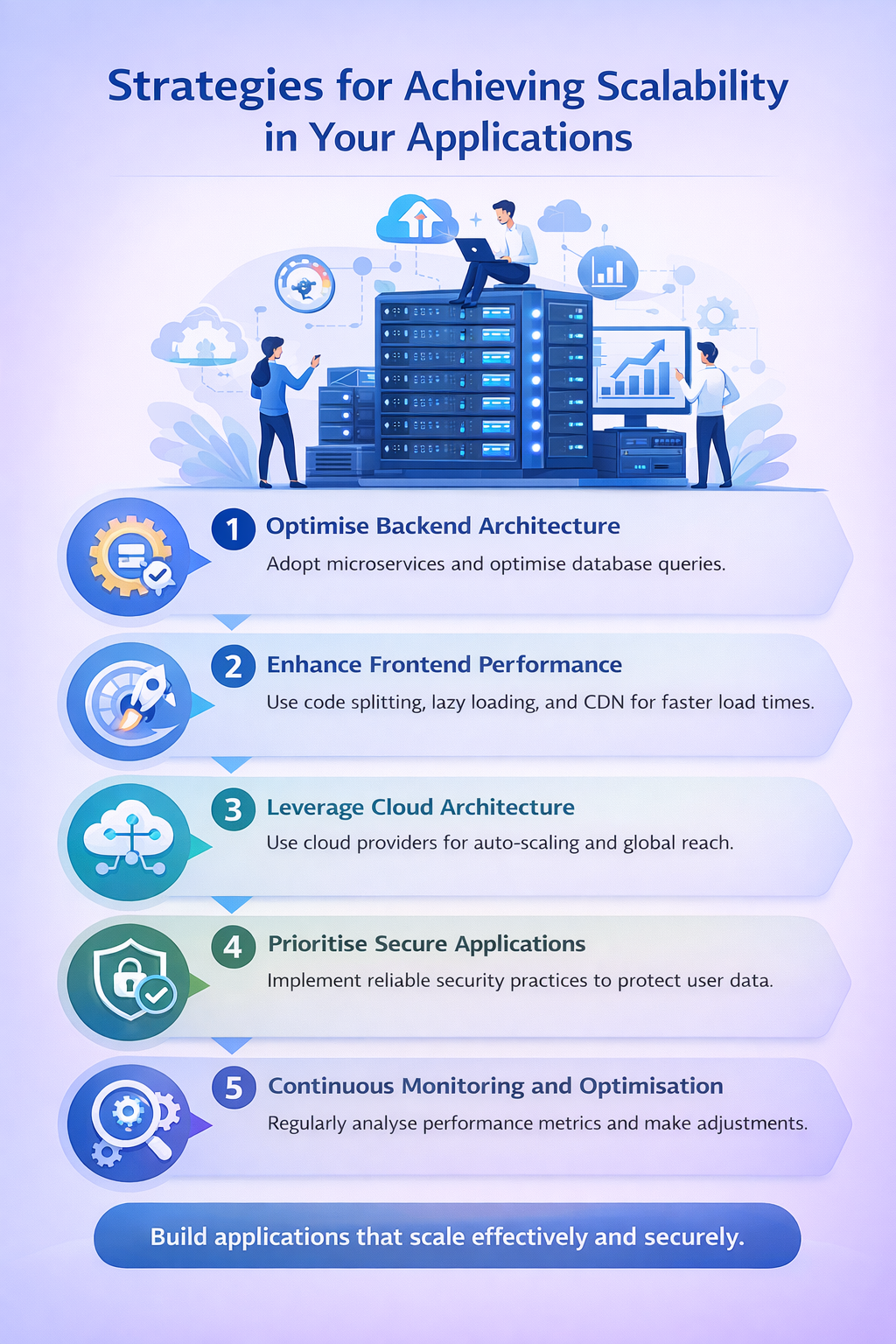
Achieving scalability requires deliberate planning throughout the application development life cycle. The OWASP on Secure Applications highlights that embedding strong software security throughout the application development life cycle ensures secure applications even as user activity increases. While the concept may seem complex, there are practical strategies businesses can adopt to ensure their systems grow alongside demand.
Optimise Backend Architecture
The backend is the engine of any application. Scalable backends separate services, balance server loads, and manage database performance efficiently. Adopting microservice architecture advantages allows individual services to be scaled independently, ensuring high availability even under peak traffic.Enhance Frontend Performance
A scalable system is not just about the backend; the frontend must also handle increased user interactions. Techniques like lazy loading, caching, and content delivery networks (CDNs) improve responsiveness for web app development and native mobile app development. A smooth frontend experience reinforces user trust and supports your digital transformation goals.Leverage Cloud Architecture
Cloud architecture provides dynamic resources that can automatically adjust to demand. By hosting your applications in the cloud, businesses can scale storage, processing power, and networking without over-investing in hardware. Cloud platforms also integrate with microservices seamlessly, enabling efficient resource allocation and cost optimisation.Prioritise Secure Applications
Growth should never compromise software security. Secure applications maintain data protection and compliance while scaling. Techniques such as automated vulnerability scanning, secure authentication, and encrypted data storage ensure that both the frontend and backend remain robust under increased load.Continuous Monitoring and Optimisation
Scalability is not a one-time effort. Continuous monitoring of system performance, server loads, and user behaviour ensures early detection of bottlenecks. Integrating analytics into the app development lifecycle allows your teams to proactively optimise resources, improving both performance and user satisfaction.
Scalability and the App Development Lifecycle
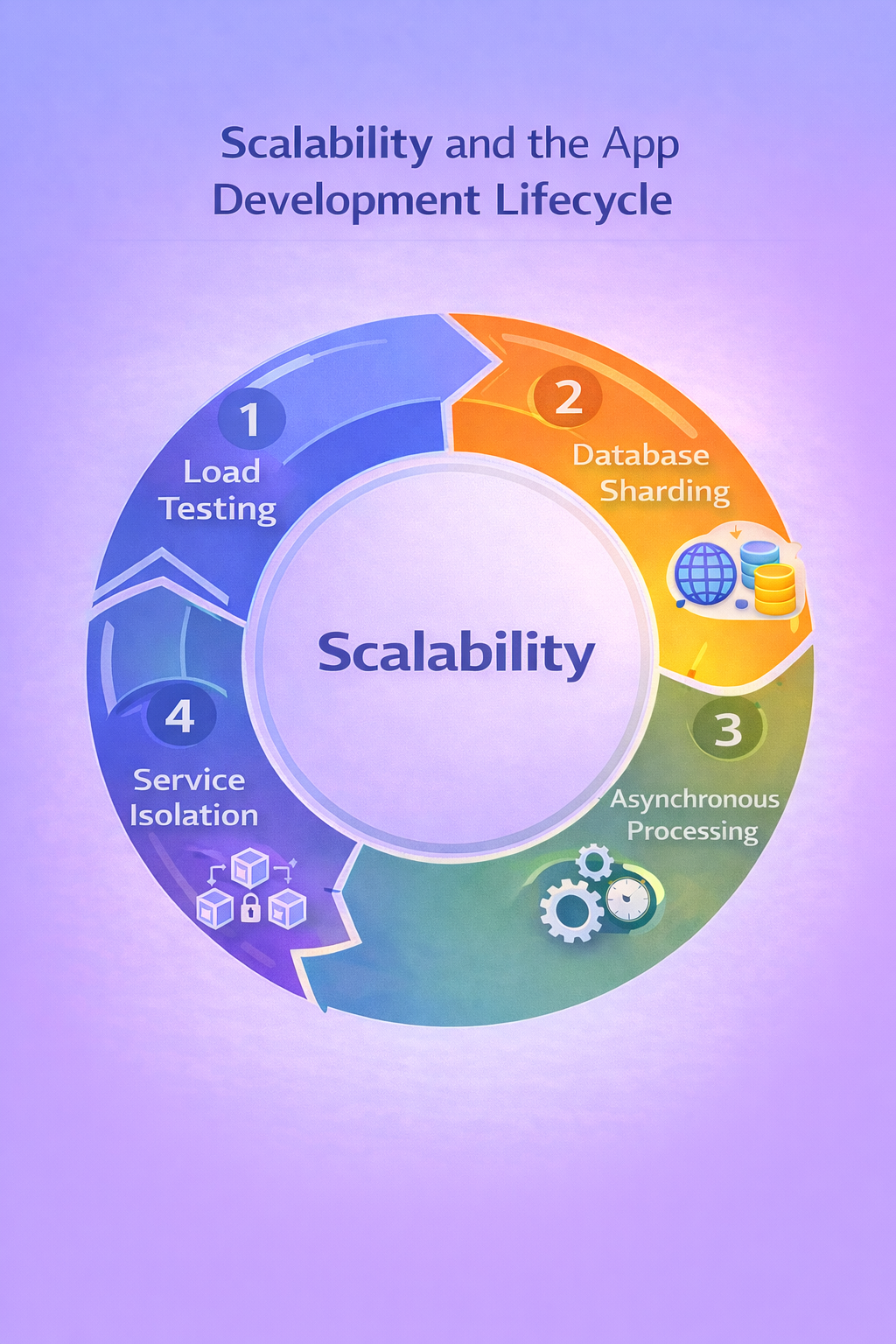
Integrating scalability into the app development lifecycle ensures that growth is sustainable. During the application development life cycle, teams should plan for:
Load testing to simulate peak usage
Database sharding to distribute data efficiently
Asynchronous processing for high-volume operations
Service isolation through microservices
By considering scalability at every stage, from software development planning to deployment, businesses reduce the risk of performance issues and maintain operational efficiency. This proactive approach aligns with enterprise software best practices, enabling large-scale adoption without interruption.
Real-World Examples of Scalability in Action
Leading companies demonstrate how scalability means more than technical resilience; it drives business outcomes. For example:
A social media platform designed with microservice architecture advantages can handle millions of concurrent users while rolling out new features without downtime.
E-commerce websites leveraging cloud architecture automatically scale servers during high-traffic periods, such as seasonal sales, without affecting user experience.
Enterprises adopting scalable enterprise software can expand globally without overhauling their systems, supporting both digital transformation and revenue growth.
These examples highlight the intersection between technical scalability and a strong business revenue model, showing that well-planned systems support both user satisfaction and profitability.
Benefits of Scalable Software Beyond Growth
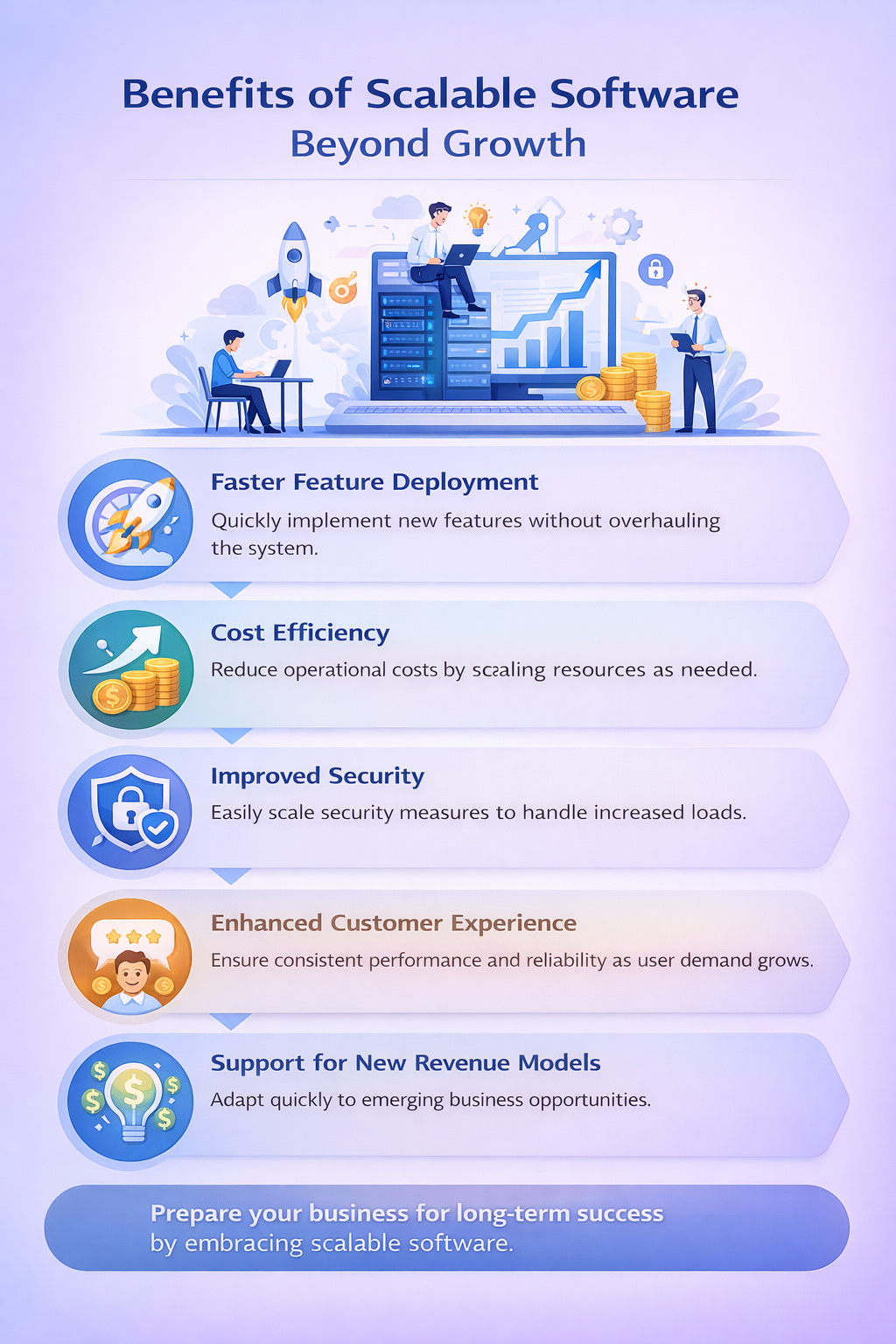
Scalability offers more than the ability to handle traffic. The advantages of microservices and scalable architectures extend to multiple aspects of your business:
Faster Feature Deployment: Scalable architectures enable development teams to add or update features independently, reducing time to market.
Cost Efficiency: By scaling only the components that need additional resources, businesses optimise their infrastructure spending.
Improved Security: Scalable systems are often easier to monitor, allowing for better detection of anomalies and breaches.
Enhanced Customer Experience: Consistent performance under increased load builds user trust and loyalty.
Support for New Revenue Models: Businesses can experiment with subscription tiers, in-app purchases, or new services without worrying about system limitations.
Integrating scalability into your software development and app development lifecycle ensures your technology supports both immediate needs and long-term growth.
Planning for Scalability in Digital Transformation
As organisations pursue digital transformation, scalability should be a foundational consideration. Key steps include:
Assess Current Systems: Identify bottlenecks and limitations in your existing enterprise software or applications.
Design for Flexibility: Choose microservice architecture advantages and cloud architecture solutions that allow modular growth.
Integrate Security: Ensure software security is embedded at every stage of development.
Align With Business Goals: Tie scalability to your business revenue model to support new markets, users, and services.
Monitor and Evolve: Continuously track performance and adapt resources, ensuring scalable applications remain efficient and secure.
By aligning scalability with strategic objectives, businesses create systems that are resilient, adaptable, and capable of driving sustainable growth.
Preparing Your Business for Scalable Success
Understanding what scalability means and implementing it in your technology stack ensures your business is ready for the future. Scalable backend and frontend systems, robust software security, and thoughtful use of microservice architecture advantages and cloud architecture allow you to meet growing user demand while maintaining quality.
By incorporating scalability into the app development lifecycle, you optimise performance, enable new revenue models, and enhance customer satisfaction. This approach ensures your digital initiatives, from web app development to native mobile app development, are future-proof and capable of supporting long-term growth.
Building Scalable Applications Is a Strategic Advantage
In the competitive digital landscape, scalability is more than a technical requirement-it is a strategic advantage. Businesses that prioritise scalable design during the software development and application development life cycle are better positioned to expand, innovate, and secure a stronger business revenue model. Scalable systems also support digital transformation, providing a foundation for modern enterprise software that can evolve with market needs.
Investing in secure applications that can grow ensures your technology infrastructure not only meets current demands but anticipates future opportunities. From optimised frontend and backend performance to the advantages of microservices, scalable systems are essential for any organisation seeking long-term success.
For businesses looking to build scalable, secure, and future-ready applications, Trinergy Digital can help. Contact Trinergy Digital today to explore web app development, native mobile app development, and enterprise software solutions designed for growth.