



Introduction
Software companies do not all make money in the same way. Some charge subscriptions, others rely on licensing, while many combine several pricing approaches. Understanding the right revenue models is critical if you are building a digital product, launching a startup, or scaling a SaaS platform.
A well designed revenue model determines how your business earns income, how customers pay, and how your product grows over time. For founders and product teams, choosing the right business revenue model can influence user acquisition, customer retention, and long term profitability.
In the software industry, revenue strategy usually evolves alongside the product. Many startups begin with a minimum viable product or MVP minimum viable product, validate demand using lean analytics, and then optimise pricing once they identify their north star metric.
In this guide, you will learn the revenue model meaning, explore common types of revenue model used by software companies, and see real revenue model examples that explain how do software companies make money.
What Is a Revenue Model
Before exploring the various types of revenue model, it is important to understand the revenue model meaning.
A revenue model explains how a business generates income from its products or services. It outlines how customers are charged, what they pay for, and how frequently payments occur.
In simple terms, your revenue generation model answers one important question:
How does your business make money?
For software businesses, this often involves a mix of product pricing, subscription plans, usage charges, and enterprise contracts. Because digital products can scale quickly, the right software revenue model can create recurring income and predictable growth.
Research by Investopedia shows that a well-defined revenue model is critical for business success, as it outlines exactly how a company generates income and identifies the most effective channels for monetisation. Understanding these types of revenue model helps software companies plan sustainable revenue generation models and make informed strategic decisions.
Example of a Revenue Model
A simple revenue model example would be a project management tool charging users a monthly subscription fee. Each customer pays a fixed amount per month to access the platform. The company earns recurring income from every active user.
Many SaaS platforms follow this approach because it provides stable cash flow and easier forecasting.
Other revenue model examples include charging for software licences, offering free basic access with paid upgrades, or charging based on product usage.
Why Revenue Models Matter in Software and SaaS
Choosing the right saas revenue model is one of the most important strategic decisions for a software business.
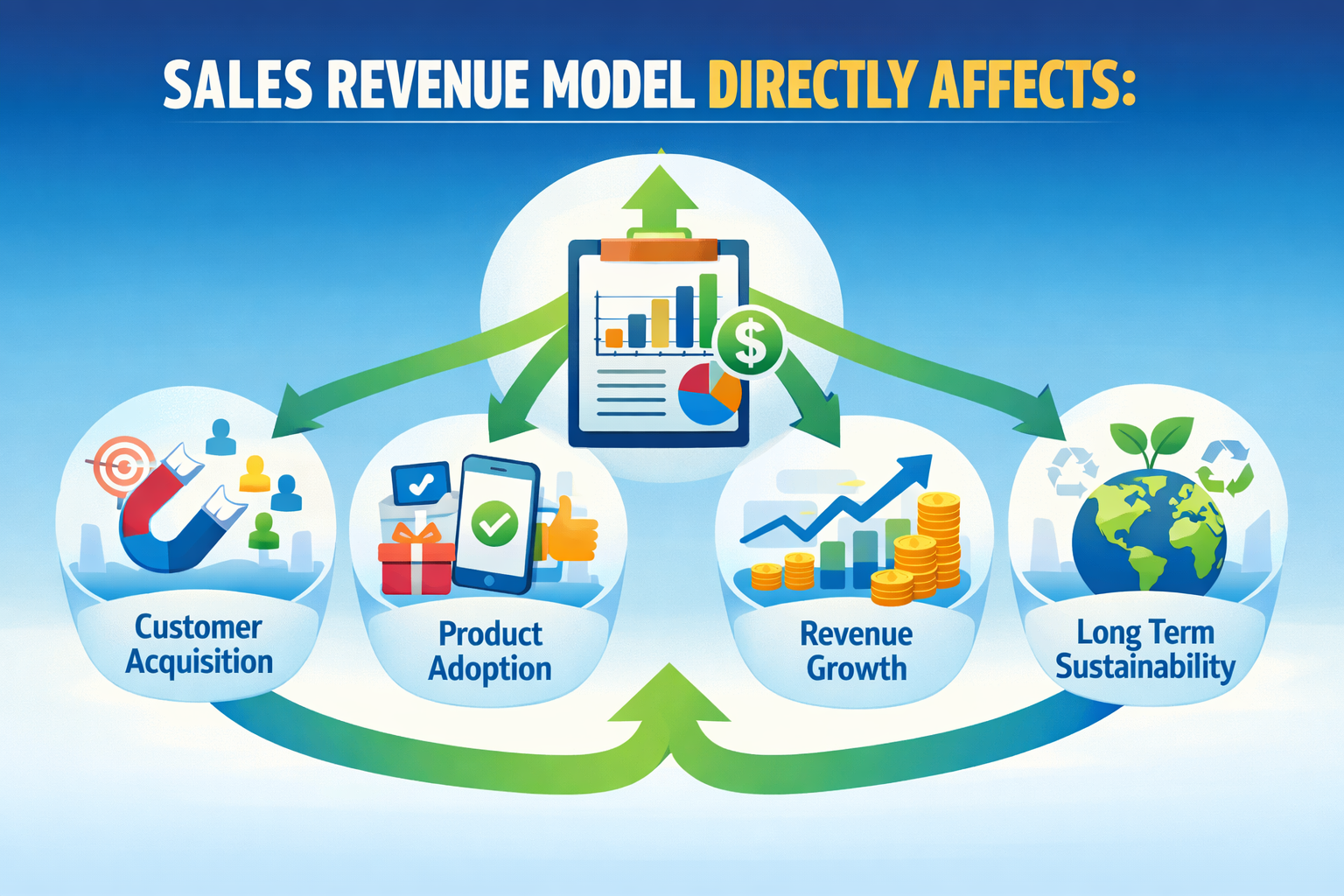
Your sales revenue model directly affects:
• customer acquisition
• product adoption
• revenue growth
• long term sustainability
If pricing is too high, potential customers may not adopt your product. If pricing is too low, your company may struggle to generate sustainable revenue.
A study by Forbes highlights that modern SaaS companies often combine multiple software revenue model examples to increase profitability. Companies may use subscriptions, freemium upgrades, or usage-based pricing, showing that flexible earning models are key to sustaining growth and responding to customer demand.
This is why startups often start small. Many founders launch a minimum viable product to test demand before finalising a pricing structure. The MVP minimum viable product approach allows teams to validate product value while collecting real user feedback.
Using frameworks such as lean analytics, founders track metrics that reveal how users interact with the product. These insights help identify the most effective software pricing strategies.
One key concept here is the north star metric. This metric represents the single measurement that best reflects the value your product delivers to users. For many SaaS companies, this might be active users, transactions completed, or tasks created.
Once you understand this metric, you can design a revenue generation model that grows alongside customer usage.
Key Elements of a Software Revenue Model
A successful software revenue model includes several components that work together to generate income.
1. Pricing structure
Your pricing structure defines how customers pay for the product. This includes subscription plans, usage fees, or one time payments.
Different pricing models for software can attract different customer segments. Startups often experiment with several software pricing strategies before settling on the most effective option.
2. Customer segments
Different users may have different needs. A small business may require basic features, while a large enterprise may need advanced tools and integrations.
Your business revenue model should reflect these differences through tiered pricing or customised plans.
3. Value proposition
Customers pay for software because it solves a problem or improves efficiency. Your earning model should align with the value delivered to users.
For example, a data analytics platform might charge based on the amount of data processed, while a design tool might charge per user.
4. Scalability
Software businesses benefit from scalable infrastructure. Once the platform is built, adding new users usually has minimal cost.
A scalable startup revenue model allows revenue to grow faster than operating costs.
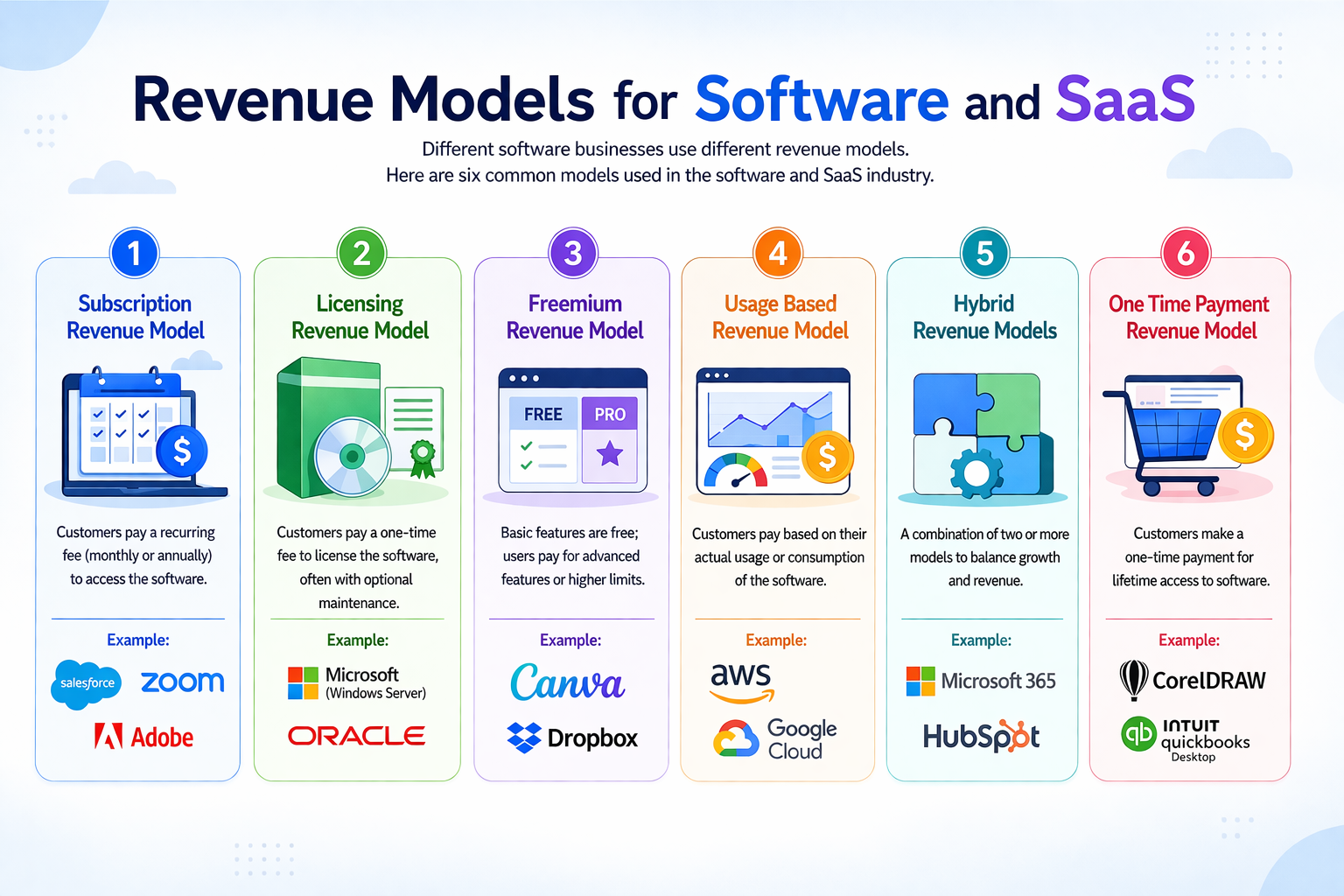
Subscription Revenue Model
The subscription model is one of the most common types of revenue model used by SaaS companies.
In this approach, customers pay a recurring fee to access software. Payments are typically made monthly or annually.
How the Subscription Model Works
The subscription sales revenue model usually follows a simple structure:
Users sign up for a plan
They pay a recurring fee
They continue paying while using the service
This predictable payment cycle makes financial planning easier for software companies.
Revenue Model Example
A popular revenue model example is a customer relationship management platform that charges businesses per user per month.
A company with ten employees may pay for ten licences. As the company grows, the software provider earns more revenue.
This structure aligns revenue with product adoption, making it one of the most effective revenue model examples in SaaS.
Why Subscription Models Work
Subscription based software revenue model structures are popular for several reasons:
• predictable recurring revenue
• lower entry cost for customers
• easier product upgrades
• strong long term customer relationships
Because of these benefits, many startups adopt subscription pricing when launching a SaaS product.
Licensing Revenue Model
Another traditional software revenue model is the licensing model.
In this approach, customers pay a one-time fee to purchase the right to use software. The software may be installed locally on the customer's systems rather than accessed online.
How Licensing Works
The licensing revenue generation model typically includes:
• a one-time purchase fee
• optional maintenance fees
• optional upgrade costs
This approach was widely used before cloud computing became popular.
Large enterprise software platforms often still use this business revenue model, particularly for on premises systems that require strict data control.
Revenue Model Example
A financial institution might purchase licensed accounting software for internal use. The organisation pays a large upfront cost and then pays annual support fees.
While licensing can generate large payments early, it lacks the recurring revenue advantage that SaaS subscriptions provide.
In the next section, we will explore additional pricing models for software, including freemium, usage based pricing, and hybrid SaaS strategies used by modern startups.
Freemium Revenue Model
The freemium revenue model has become increasingly popular among SaaS startups. It combines free access to a basic version of software with paid plans that offer advanced features. This approach is particularly effective for new products looking to build a user base quickly.
How the Freemium Model Works
A typical software revenue model using freemium works like this:
Users sign up for a free version of the software
They use the product with limited features or usage
As their needs grow, some users upgrade to a paid plan
This earning model leverages large user bases to convert a percentage into paying customers, creating a predictable revenue stream.
Revenue Model Example
Consider a design platform offering basic design tools for free but charging for premium templates, storage, and team collaboration features. While millions use the free plan, only a fraction pay for advanced tools. The revenue from paying users funds ongoing development and expansion.
Freemium is effective because it reduces the barrier to entry while encouraging users to invest in features they find valuable. Many SaaS companies use this model alongside lean analytics to track user engagement and identify upgrade opportunities.
Usage Based Revenue Model
The usage based revenue model charges customers based on how much they use the software. It is common in cloud services, APIs, and data platforms. This model ensures customers pay in proportion to the value they derive, which can improve satisfaction and retention.
How Usage Based Pricing Works
A typical sales revenue model for usage-based software includes:
• measuring usage metrics such as storage, API calls, or transaction volume
• applying a rate per unit of usage
• billing periodically (monthly or quarterly)
This flexible approach appeals to companies that want to scale their costs alongside growth rather than paying a fixed fee.
Revenue Model Example
A cloud storage platform might charge businesses per gigabyte of data stored per month. A startup storing 100 GB pays significantly less than an enterprise storing 10 TB. This structure aligns revenue with usage and encourages efficient resource management.
The usage model is particularly suited to SaaS companies offering infrastructure or platform services, as it allows revenue to scale naturally with customer adoption.
Hybrid Revenue Models
Many modern software companies adopt a hybrid revenue generation model that combines elements of subscription, freemium, and usage-based pricing. Hybrid models provide flexibility and allow businesses to optimise monetisation as their product matures.
How Hybrid Models Work
A hybrid software revenue model might include:
A base subscription for standard access
Usage-based charges for high-volume features
Optional premium add-ons for advanced capabilities
This combination provides recurring revenue while capturing additional value from heavy users.
Revenue Model Example
A marketing automation platform could charge a monthly subscription for basic campaigns, a fee per email sent above a limit, and additional charges for AI driven analytics. This SaaS revenue model ensures the company earns revenue across multiple channels and maximises lifetime value.
Hybrid models are increasingly common among startups that have validated their minimum viable product and are seeking scalable revenue streams. They allow flexibility to adjust software pricing strategies based on customer behaviour tracked with lean analytics.
One Time Payment Revenue Model
The one time payment or perpetual licence model is less common in SaaS but still relevant for certain software. Customers pay once to access the product indefinitely, often with optional maintenance and support fees.
How It Works
In this startup revenue model, revenue is earned upfront:
• customers purchase a licence once
• optional support and updates are sold separately
• no recurring subscription is required
Revenue Model Example
A video editing software might sell a lifetime licence for £200, with optional annual updates. While this model generates immediate revenue, it can make long-term forecasting harder compared to subscription models.
Despite being less predictable, the one time payment software revenue model may suit companies targeting users resistant to recurring fees or in regions where subscription adoption is slower.
Choosing the Right Software Revenue Model
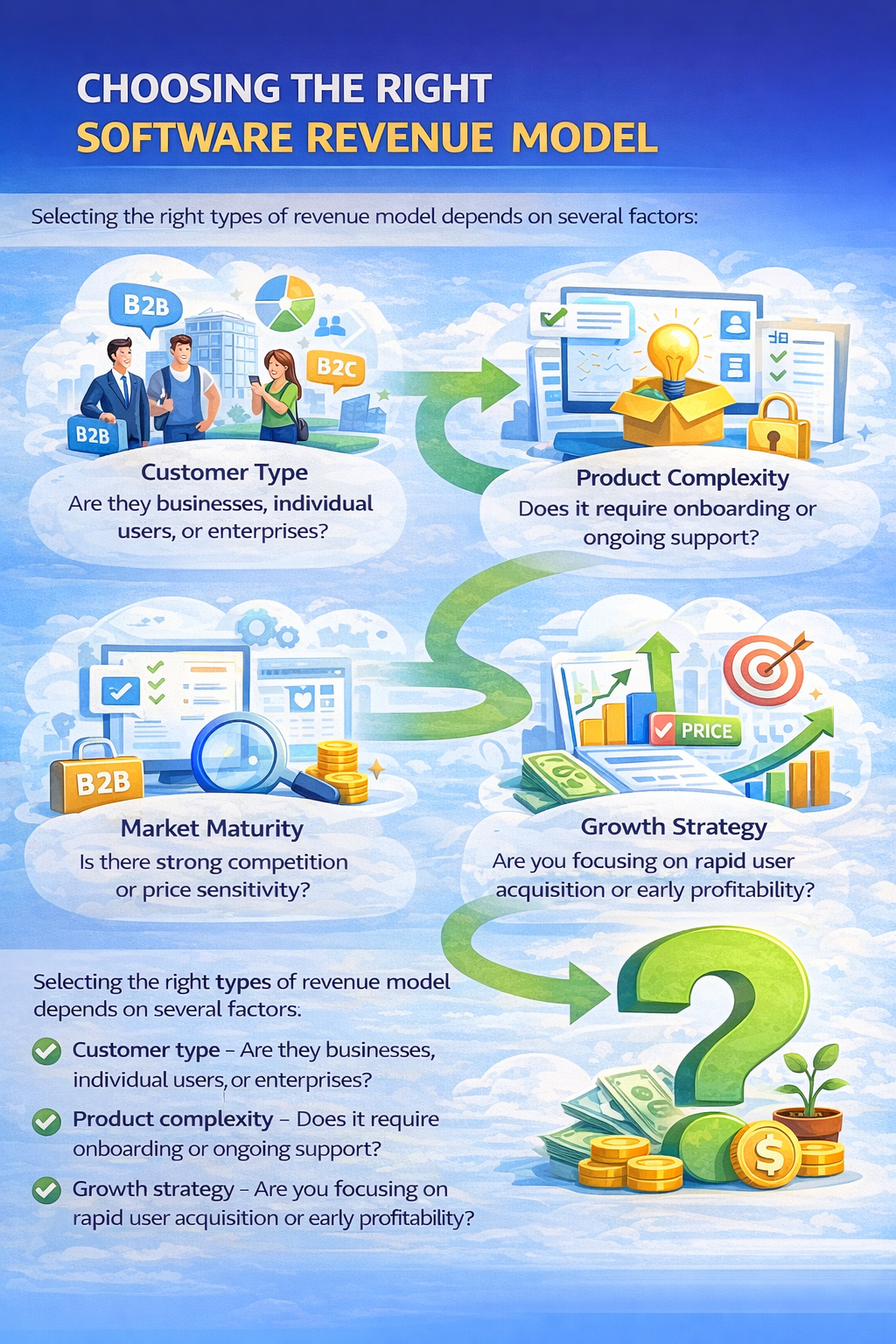
Selecting the right types of revenue model depends on several factors:
Customer type - Are they businesses, individual users, or enterprises?
Product complexity - Does it require onboarding or ongoing support?
Market maturity - Is there strong competition or price sensitivity?
Growth strategy - Are you focusing on rapid user acquisition or early profitability?
Startups often start with an MVP minimum viable product to test user willingness to pay. Using lean analytics, you can track conversions, engagement, and your north star metric to refine the software pricing strategies.
Research by Harvard Business Review demonstrates that effective software pricing strategies directly impact revenue growth and customer retention. By carefully selecting pricing plans and tiers, companies can align their business revenue model with the value delivered to users, optimise profit margins, and support scalable revenue streams.
Experimenting with multiple revenue model examples can reveal which combination maximises revenue while delivering value to users. Many successful SaaS companies iterate their earning model over time, moving from freemium to subscription, or introducing usage-based fees as the platform scales.
Metrics to Evaluate Your Revenue Model
To ensure a business revenue model is sustainable, track key metrics:
• Monthly Recurring Revenue (MRR) - recurring income from subscriptions
• Customer Lifetime Value (CLV) - total revenue from a customer over their lifetime
• Churn Rate - percentage of customers leaving the platform
• Average Revenue Per User (ARPU) - helps optimise pricing plans
These metrics help evaluate how well your sales revenue model supports growth and sustainability.
Building a Scalable SaaS Revenue Model
A scalable SaaS revenue model allows revenue to grow faster than costs. Key principles include:
• Aligning pricing with customer value
• Offering tiered or hybrid pricing models for software
• Continuously testing software pricing strategies using lean analytics
• Focusing on your north star metric to measure product success
By designing a revenue generation model that scales with adoption, software businesses can ensure long-term profitability while supporting product innovation.
Next Steps for Software Companies
Whether launching a startup revenue model or refining an existing SaaS product, the choice of revenue models is a strategic decision that impacts growth, customer retention, and profitability. Understanding how do software companies make money and experimenting with revenue model examples can help your business identify the most effective strategy.
The right combination of subscription, freemium, usage, and hybrid models creates a predictable software revenue model that supports sustainable growth.