



Introduction to Mobile App Performance Monitoring
In today's digital landscape, your mobile apps are a direct reflection of your brand and the user experience you provide. Users expect fast, responsive, and secure applications whether they interact with native mobile apps or web-based solutions. This makes mobile app performance monitoring a critical part of software development and ongoing app maintenance.
Mobile app performance monitoring refers to the process of tracking and analysing the behaviour of an application in real-time to identify issues affecting speed, stability, and usability. Through proper mobile performance monitoring, businesses can gain insights into both frontend and backend performance, ensuring that apps meet user expectations and maintain high engagement levels.
Whether you are involved in native mobile app development or web app development, understanding how your app performs under different conditions is essential. This includes tracking load times, crash rates, and server response times while also ensuring the app is secure.
Why Mobile Performance Monitoring Matters
The success of an app is no longer measured solely by downloads. Modern users prioritise quality, reliability, and security. Apps that suffer from slow response times or frequent crashes face high churn rates, negative reviews, and reduced revenue.
Here are key reasons why app performance monitoring should be a core focus:
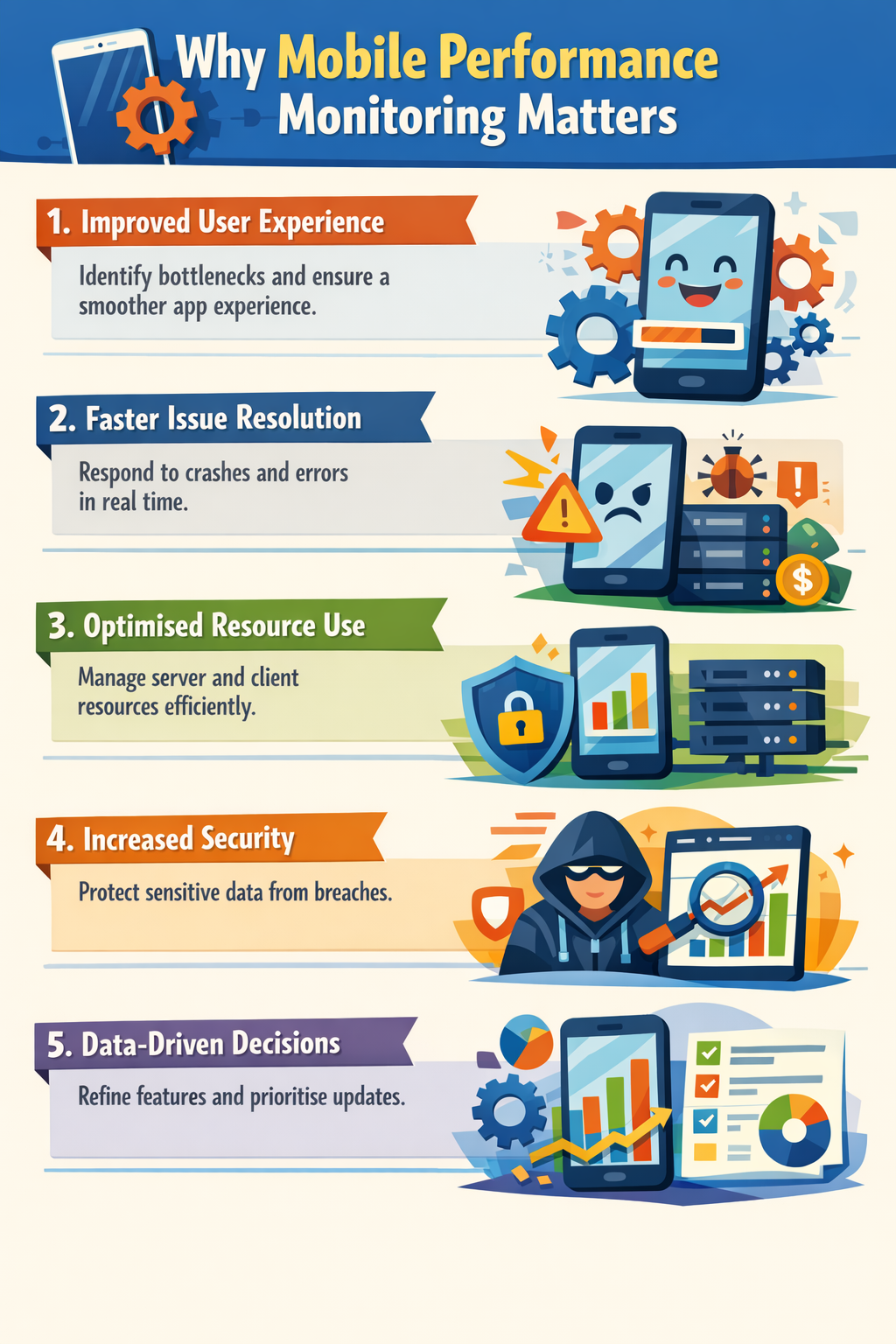
Improved User Experience: Monitoring app performance allows you to quickly identify bottlenecks in frontend or backend processes, providing a smoother experience.
Faster Issue Resolution: Real-time monitoring helps your team respond to crashes, errors, and performance degradation immediately.
Optimised Resource Use: Understanding how your app uses server and client resources aids in planning for scalability and cost efficiency.
Increased Security: Incorporating software security checks within mobile app monitoring ensures that sensitive data is protected from breaches.
Data-Driven Decisions: Insights from app performance analytics allow developers to refine features, improve usability, and prioritise updates effectively.
Effective mobile apps tracking not only detects technical issues but also helps in measuring user engagement and retention. Integrating mobile app tracking tools with your development process provides a holistic view of app health and performance.
Key Metrics to Track in Mobile App Monitoring
Monitoring performance is more than checking whether an app works. It involves tracking specific metrics that indicate the health and efficiency of your app. Here are the essential metrics to monitor:
1. App Load Time
Load time is the duration it takes for an app to become fully functional after being opened. Slow load times can frustrate users and increase abandonment rates. Both frontend and backend components influence load times. Optimising assets, caching strategies, and server responses are critical for reducing delays.
2. Crash Rate
The crash rate measures how often an app stops working unexpectedly. A high crash rate is detrimental to app reputation. Mobile app monitoring tools help detect the root causes of crashes, whether they originate from frontend logic errors, backend failures, or third-party integrations.
3. Response Time
Response time refers to the speed at which your app reacts to user interactions. For instance, how quickly a page loads after a button click. High response times can signal backend inefficiencies or issues in frontend code, impacting usability.
4. Error Rate
The error rate tracks failed operations within the app, such as failed API calls or unsuccessful transactions. Monitoring this metric helps in improving the stability and reliability of the app.
5. Network Latency
Network latency measures delays in data transmission between the app and servers. This metric is crucial for apps that rely heavily on cloud services or live data, such as social media apps or e-commerce platforms.
6. Retention and Engagement Metrics
While technical metrics are critical, tracking user engagement is equally important. Metrics like session duration, daily active users, and retention rates offer insights into how users interact with your app and whether performance issues impact their experience.
7. Security Monitoring
Software security should be integrated into your monitoring plan. Detecting vulnerabilities, unauthorised access, and potential data leaks ensures that your apps are compliant and secure. Monitoring both native mobile app development and web app development environments is essential for secure applications.
Essential Mobile App Tracking Tools
Selecting the right tools is crucial for effective mobile app tracking and app performance monitoring. Here are the top categories and recommended solutions:
1. Real-Time Monitoring Tools
Real-time tools provide immediate insights into app performance. They monitor crashes, response times, and errors as they occur. Examples include:
Firebase Performance Monitoring: Offers detailed app performance analytics, network tracing, and crash reporting.
New Relic Mobile: Tracks mobile app performance across devices and OS versions.
2. Analytics and User Behaviour Tools
Understanding user behaviour alongside performance metrics is key to making informed decisions. These tools provide insights on session duration, retention, and feature usage:
Mixpanel: Analyses user interactions and engagement, allowing you to optimise features.
Amplitude: Focuses on retention metrics and user journeys to improve app performance.
3. App Install Tracking Tools
Tracking installs helps in measuring marketing ROI and user acquisition success. An app install tracking tool monitors where downloads originate and which campaigns drive the most engagement:
Adjust: Offers install tracking, in-app analytics, and fraud prevention.
AppsFlyer: Combines mobile app tracking tools with deep insights on user behaviour.
4. Error and Crash Reporting Tools
These tools help detect and resolve issues quickly, reducing downtime and negative reviews:
Sentry: Provides detailed crash reports for both frontend and backend issues.
Bugfender: Allows developers to remotely track errors without requiring user intervention.
5. Security Monitoring Tools
Integrating software security tools with your monitoring strategy ensures apps are resilient against threats:
OWASP ZAP: Performs security testing during software development cycles.
Veracode: Scans applications for vulnerabilities and enforces secure coding practices.
Using a combination of these tools allows development teams to maintain healthy apps, improve user satisfaction, and ensure scalability as user demands grow.
Google Firebase Performance Monitoring is a powerful tool for mobile app performance monitoring that provides real-time insights into app behaviour. It tracks key metrics such as response time, load times, and network requests, giving developers visibility into both frontend and backend performance. By integrating Firebase into native mobile app development or web app development workflows, teams can identify performance bottlenecks, optimise user experience, and enhance overall app performance.
App Performance Analytics Best Practices
Collecting data is only useful if it is analysed and acted upon effectively. Implementing app performance analytics best practices ensures that your mobile performance monitoring yields actionable insights:
Define Key Performance Indicators (KPIs): Identify metrics aligned with business goals, such as load times, crash rates, or user retention.
Monitor Both Frontend and Backend: A well-functioning frontend does not guarantee overall performance. Monitor backend processes, APIs, and server health.
Implement Automated Alerts: Use your monitoring tools to set up notifications for critical issues, enabling quick resolution.
Benchmark Performance: Compare your app against industry standards or previous versions to measure improvements.
Integrate With Software Testing Types: Incorporate types of testing in software development such as functional, load, and security testing to identify hidden performance bottlenecks.
Ensure Continuous Monitoring: Mobile apps evolve quickly. Continuous mobile app monitoring ensures that updates do not introduce new issues.
Mobile apps tracking should not be limited to detecting failures. Analysing trends over time allows you to anticipate issues, optimise scalability, and deliver a consistently reliable user experience.
For example, New Relic Mobile Monitoring provides a platform for tracking mobile apps tracking metrics, including crashes, errors, and user interactions. It monitors mobile performance monitoring across devices, offering detailed app performance analytics. With New Relic, teams can quickly detect issues in both frontend and backend systems, optimise scalability, and maintain high app performance.
Ensuring Software Security in Mobile Apps
Ensuring software security is a critical component of mobile app monitoring. Users increasingly expect apps to safeguard personal data, and breaches can significantly damage a brand's reputation. Integrating secure applications principles from the start of software development helps prevent vulnerabilities and improves long-term app performance.
1. Secure Coding Practices
Whether you are engaged in native mobile app development or web app development, following secure coding practices is essential. These include validating user inputs, encrypting sensitive data, and avoiding hard-coded credentials. Mobile app performance monitoring should include checks for potential security issues in both frontend and backend components.
2. Regular Security Audits
Routine security audits identify vulnerabilities before they can be exploited. Incorporating types of testing in software such as penetration testing, vulnerability scanning, and code reviews ensures that both frontend and backend systems remain secure. Tools like OWASP ZAP and Veracode help automate these audits.
3. Protecting User Data
Secure data storage and transmission are key for secure applications. Use encryption protocols like HTTPS and AES, implement token-based authentication, and monitor data flow between servers and mobile devices. Mobile performance monitoring can flag anomalies in data requests or unusual traffic patterns, indicating potential security threats.
4. Compliance with Regulations
Depending on your region, apps may need to comply with privacy laws such as GDPR or the Data Protection Act. Ensuring compliance requires ongoing mobile app monitoring to confirm that user data is handled securely throughout the app lifecycle.
For teams prioritising software security, the OWASP Mobile Security Project provides a comprehensive set of guidelines and tools to identify vulnerabilities in mobile applications. By following OWASP best practices, developers can implement secure coding standards, perform rigorous security testing, and ensure that both frontend and backend components are protected. Integrating these guidelines into your mobile app monitoring strategy helps maintain secure applications and reduces the risk of breaches.
Optimising Mobile App Performance
Optimising mobile app performance improves both user experience and operational efficiency. By combining mobile apps tracking and app performance analytics, developers can identify and resolve performance bottlenecks.
1. Frontend Optimisation
The frontend of an app impacts load times, responsiveness, and overall usability. Key strategies include:
Minimising resource size: Optimise images, compress files, and reduce unnecessary scripts.
Efficient rendering: Use asynchronous loading and caching to improve load speed.
Optimising animations: Ensure that animations are smooth without overloading CPU resources.
Monitoring frontend metrics such as response times, rendering speed, and interaction delays is crucial to maintaining high app performance.
2. Backend Optimisation
The backend supports the logic, data storage, and server-side operations of an app. Optimisation strategies include:
Database performance: Index tables, optimise queries, and use caching for frequently accessed data.
API efficiency: Minimise latency and reduce unnecessary API calls.
Server scalability: Use load balancing and scalable infrastructure to handle spikes in user traffic.
Mobile performance monitoring tools can track backend performance, ensuring that server responses remain fast even under heavy load.
3. Scalability Planning
As apps grow, planning for scalability ensures they continue to deliver high performance. App performance monitoring helps anticipate resource needs and identify potential bottlenecks in both frontend and backend systems. Cloud-based solutions can automatically adjust resources to meet demand, reducing downtime and maintaining user satisfaction.
Integrating Mobile App Monitoring with Software Testing
Incorporating mobile app monitoring into types of testing in software improves overall quality and reduces the risk of post-release issues.
1. Functional Testing
Functional testing verifies that all app features work as intended. Monitoring tools help identify areas where functionality fails due to performance issues or bugs in the frontend or backend.
2. Load and Stress Testing
These tests evaluate app behaviour under high user load. Using mobile apps tracking during load testing provides real-time data on response times, server capacity, and resource utilisation. This ensures that your app can handle peak demand without compromising app performance.
3. Security Testing
Security testing assesses potential vulnerabilities. By integrating software security monitoring into testing workflows, developers can detect and fix issues before they impact end users. Automated mobile app tracking tools can simulate attacks to identify weaknesses.
4. Regression Testing
Regression testing ensures that updates or new features do not introduce new performance issues. Mobile performance monitoring tools help detect regressions in both native mobile app development and web app development environments.
Leveraging App Performance Analytics
App performance analytics transforms raw monitoring data into actionable insights. By combining analytics with mobile app tracking tools, teams can improve user experience, optimise software development processes, and support business goals.
1. Identify Performance Trends
Analytics tools reveal long-term trends in load times, crash rates, and error frequency. Recognising patterns allows developers to proactively address performance degradation before it affects users.
2. Improve Feature Design
Tracking user interactions highlights which features are popular and which cause friction. Incorporating these insights into native mobile app development or web app development improves usability and increases engagement.
3. Optimise Marketing Campaigns
Integrating an app install tracking tool with analytics helps measure the effectiveness of user acquisition campaigns. Understanding which campaigns drive high-quality users allows marketing teams to optimise spend and improve ROI.
4. Support Continuous Improvement
Mobile app performance monitoring combined with mobile apps tracking supports iterative development. Developers can test new updates, monitor performance impact, and adjust quickly to maintain secure applications and scalable systems.
Tips for Effective Mobile App Tracking
Implementing mobile app tracking tools effectively requires careful planning and ongoing attention. Here are practical tips:
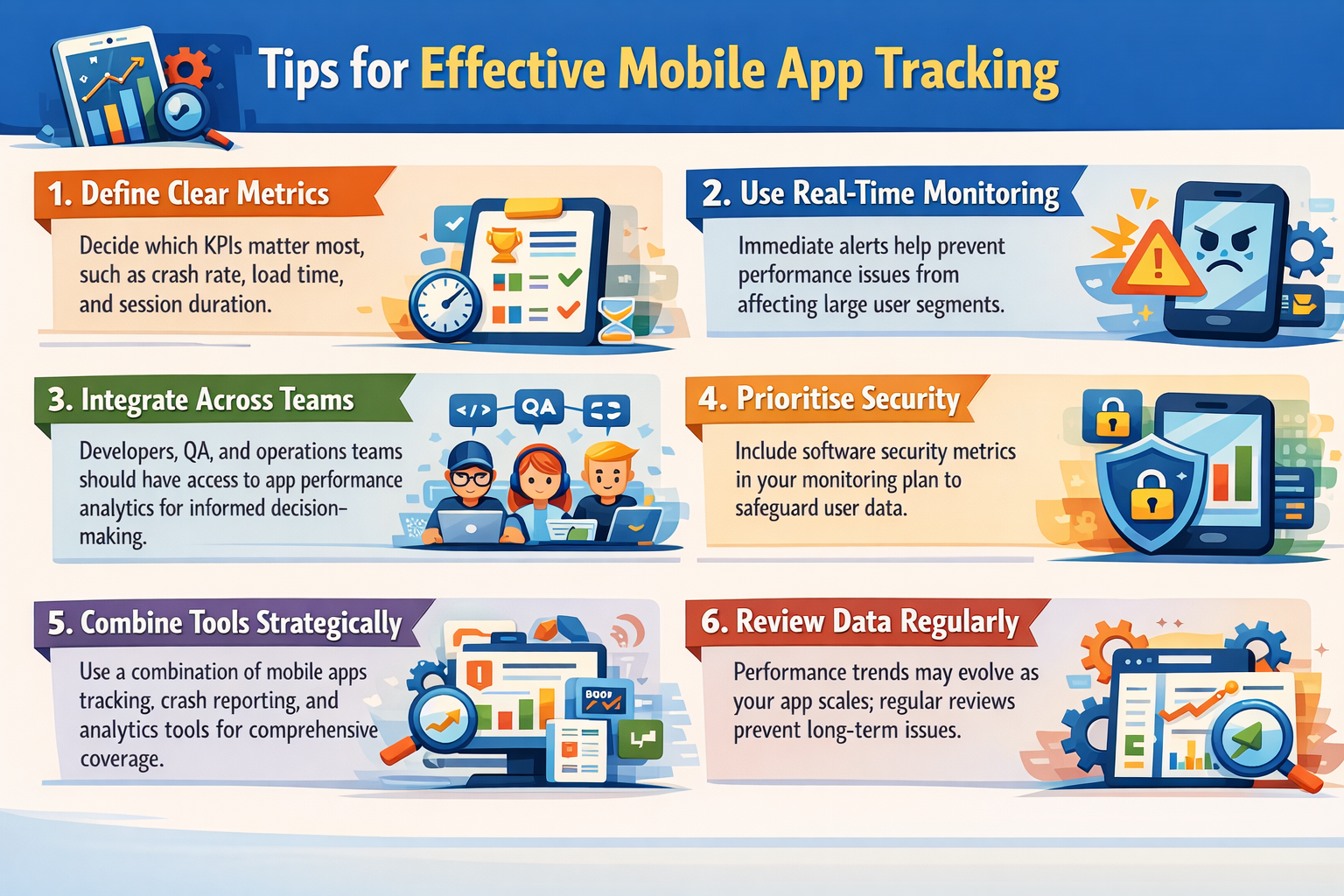
Define Clear Metrics: Decide which KPIs matter most, such as crash rate, load time, and session duration.
Use Real-Time Monitoring: Immediate alerts help prevent performance issues from affecting large user segments.
Integrate Across Teams: Developers, QA, and operations teams should have access to app performance analytics for informed decision-making.
Prioritise Security: Include software security metrics in your monitoring plan to safeguard user data.
Combine Tools Strategically: Use a combination of mobile apps tracking, crash reporting, and analytics tools for comprehensive coverage.
Review Data Regularly: Performance trends may evolve as your app scales; regular reviews prevent long-term issues.
Common Challenges and How to Overcome Them
Despite best practices, teams may encounter challenges in mobile app performance monitoring.
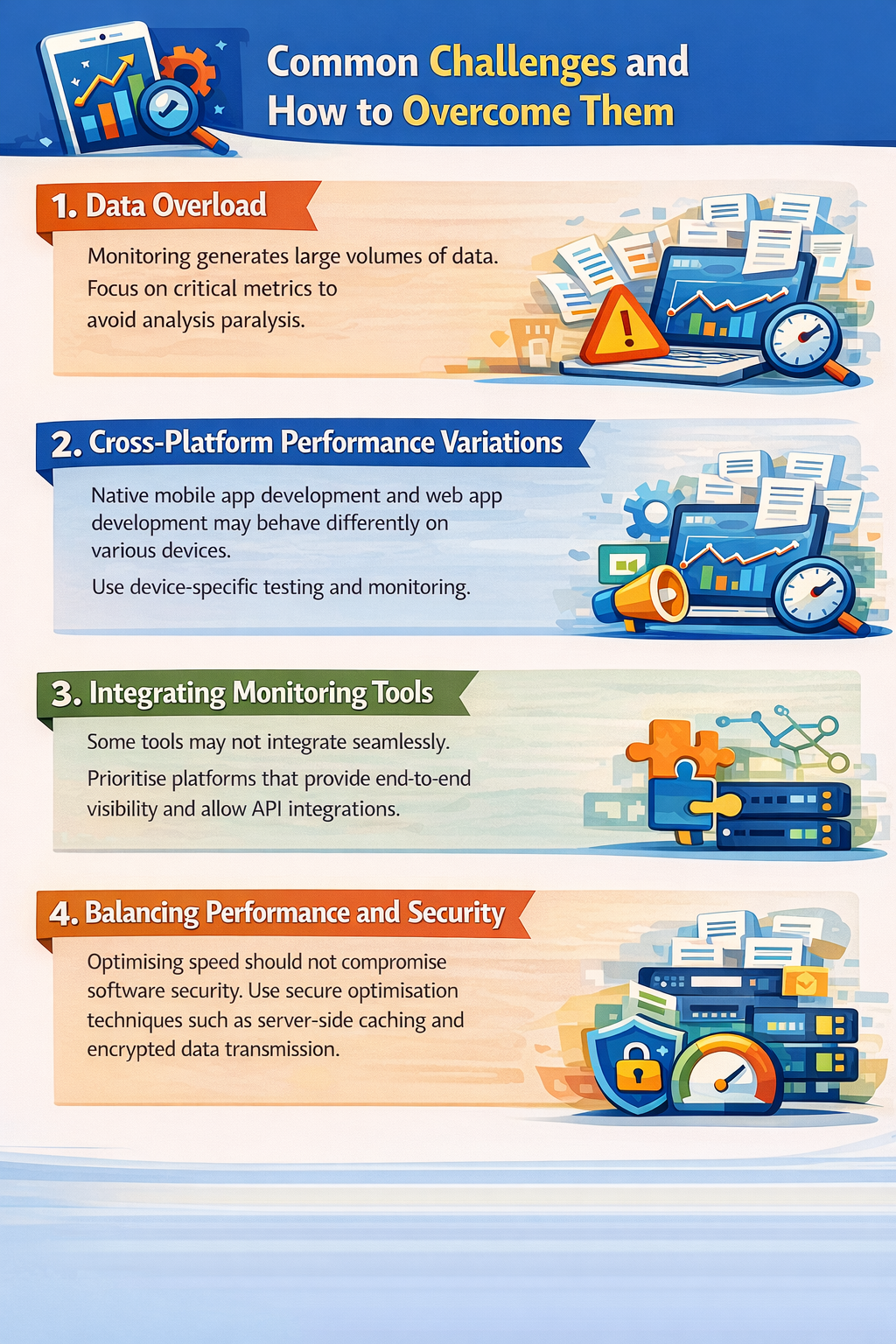
Data Overload: Monitoring generates large volumes of data. Focus on critical metrics to avoid analysis paralysis.
Cross-Platform Performance Variations: Native mobile app development and web app development may behave differently on various devices. Use device-specific testing and monitoring.
Integrating Monitoring Tools: Some tools may not integrate seamlessly. Prioritise platforms that provide end-to-end visibility and allow API integrations.
Balancing Performance and Security: Optimising speed should not compromise software security. Use secure optimisation techniques such as server-side caching and encrypted data transmission.
By addressing these challenges proactively, you ensure app performance remains high while maintaining secure applications and scalable systems.
Future Trends in Mobile App Performance Monitoring
Looking ahead, mobile performance monitoring will evolve with advancements in AI, cloud computing, and real-time analytics:
AI-Powered Monitoring: AI can predict performance issues before they occur, enabling proactive interventions.
Serverless Architectures: Backend systems using serverless frameworks require specialised monitoring to manage dynamic resource allocation.
Unified Analytics Platforms: Combining mobile app tracking, app performance analytics, and security insights into a single dashboard simplifies decision-making.
Focus on Security by Design: Future software development practices will emphasise secure coding and continuous software security monitoring.
Achieving Optimal App Performance
Ensuring high mobile app performance requires a holistic approach combining mobile app monitoring, analytics, testing, and secure software development practices. Monitoring both frontend and backend systems, integrating mobile app tracking tools, and prioritising secure applications allows teams to deliver reliable and engaging user experiences.
By adopting structured software testing types, leveraging app install tracking tools, and continuously analysing data from mobile apps tracking, developers can optimise performance, scale applications effectively, and maintain security standards.
High-performing apps not only satisfy users but also strengthen brand credibility, increase retention, and drive business growth. With the right tools, metrics, and strategies, teams can proactively manage mobile performance monitoring and achieve long-term success.
To elevate your mobile app performance and implement advanced mobile app monitoring, Trinergy Digital can provide customised solutions for native mobile app development, web app development, and secure, scalable applications. Contact us today to explore how we can help optimise your app performance.