



Introduction
In today's digital age, the success of an online store relies on more than just listing products online. Understanding what are the features of e-commerce that genuinely influence buying decisions is critical for businesses looking to expand their online presence. Whether you are launching a new store or upgrading an existing one, incorporating the right e-commerce features ensures your website is user-friendly, secure, and capable of converting visitors into customers.
E-commerce in Malaysia is growing rapidly, with more consumers opting for online shopping for convenience and variety. This trend highlights the importance of understanding ecommerce features that make a difference, from seamless navigation to integrated payment solutions. Investing in a robust online store equipped with these features is not only a smart strategy but a necessity in today's competitive market.
Core Features of E-Commerce That Enhance Sales
Identifying the characteristics of e-commerce that drive conversions is essential for any online business. These core features form the foundation of a store's success and contribute to both customer satisfaction and operational efficiency.
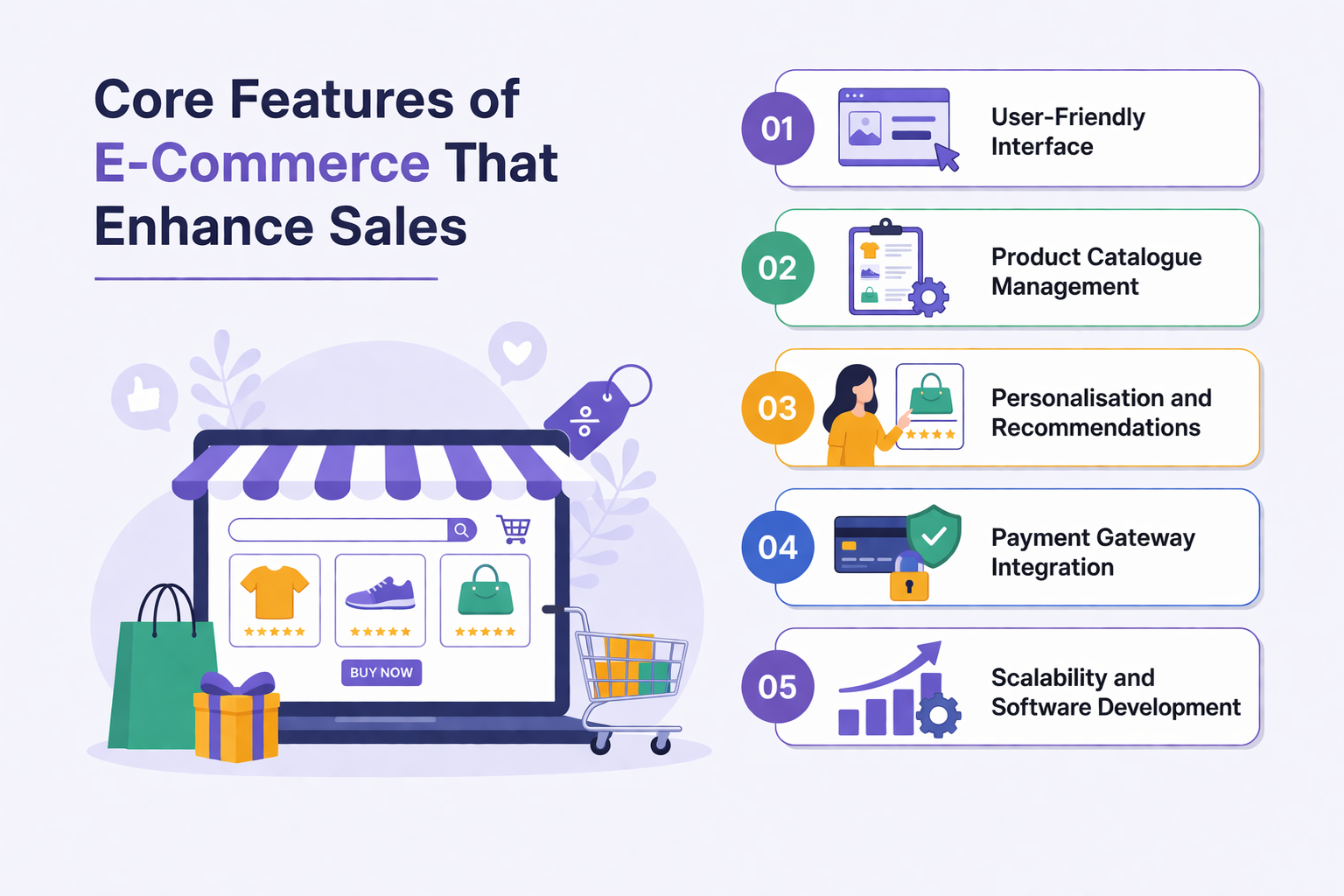
1. User-Friendly Interface
One of the most critical features of ecommerce is a clean and intuitive interface. Customers expect easy navigation, fast-loading pages, and clear product categorisation. A complicated or cluttered website can lead to high bounce rates and lost sales. Essential online shopping features include:
Clear menus and search functionality
Responsive design for mobile devices
Easy-to-read product pages with detailed descriptions
By prioritising a user-friendly interface, your store provides a seamless shopping experience, directly impacting sales and repeat business.
2. Product Catalogue Management
Effective product management is another vital feature of e commerce. Your online store should allow you to manage a diverse range of products efficiently. Features to consider include:
Bulk upload options for products
Product categorisation and tagging
Inventory tracking and stock alerts
A well-organised catalogue ensures that customers can quickly find the products they want, which increases conversion rates and reduces the likelihood of abandoned carts.
3. Personalisation and Recommendations
Modern shoppers expect personalised experiences. Integrating AI-powered recommendation engines into your e-commerce platform is a powerful way to increase sales. By analysing browsing history, purchase behaviour, and customer preferences, you can suggest relevant products and promotions. Personalisation is among the most impactful ecommerce platform features because it encourages higher average order values and customer loyalty.
4. Payment Gateway Integration
A smooth checkout process is critical for completing sales. Payment gateway integration is a fundamental feature of ecommerce that allows customers to pay securely and conveniently. Offering multiple payment options, including credit cards, e-wallets, and local bank transfers, caters to diverse customer preferences. For Malaysian businesses, integrating local payment gateways is essential to ensure trust and accessibility.
A frictionless checkout process reduces cart abandonment and boosts the benefits of ecommerce, making it easier for customers to finalise purchases without hesitation.
5. Scalability and Software Development
Scalability is a crucial feature of e commerce for businesses anticipating growth. Your e-commerce platform should support increasing traffic, expanding product ranges, and adding new functionalities without compromising performance. Investing in scalable software development ensures that your online store can adapt to market demands and maintain a high-quality shopping experience.
Scalable platforms also support international expansion and integration with third-party tools, providing long-term operational flexibility.
User Experience and Design Features
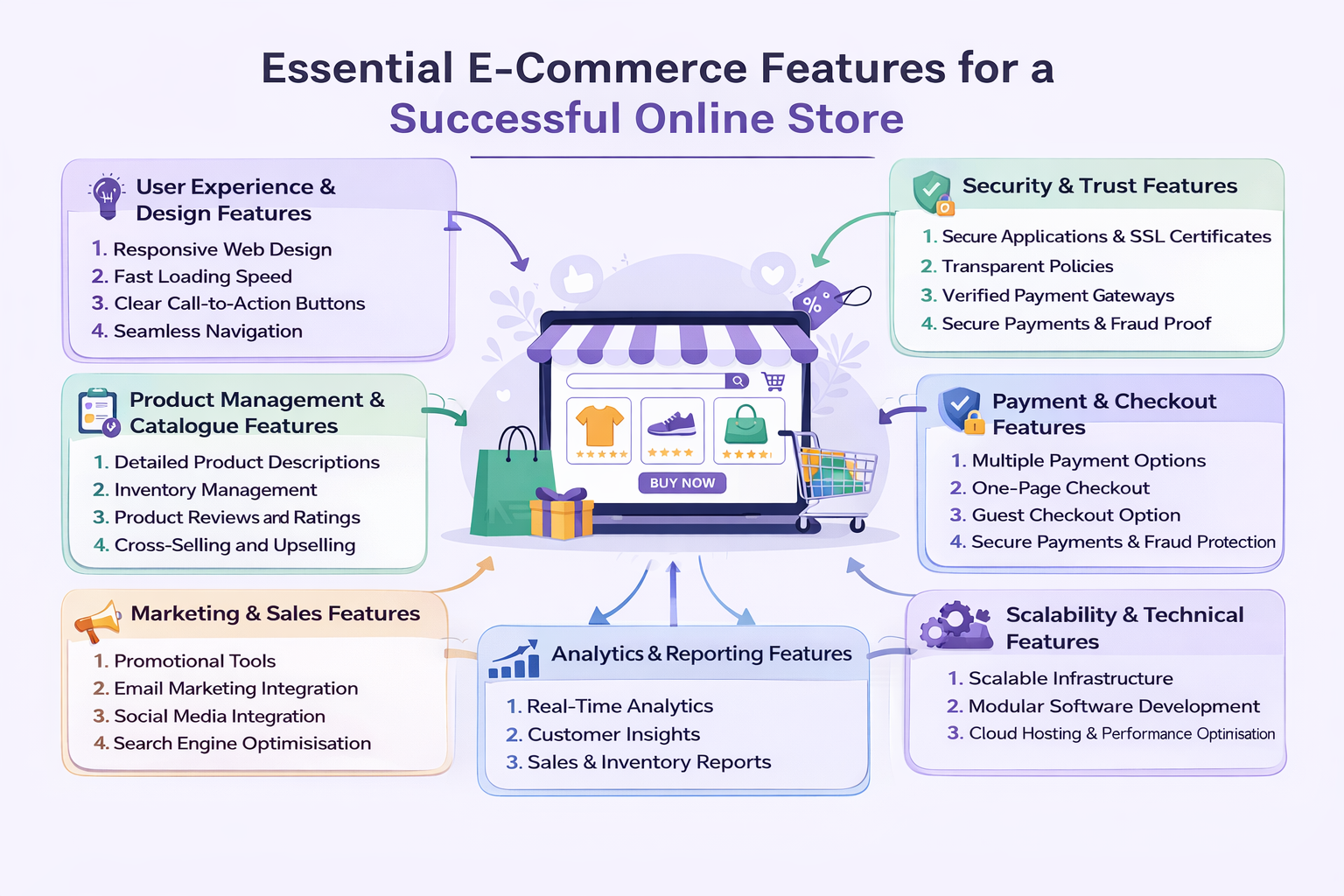
A website's design directly influences customer engagement and conversion rates. Incorporating online shopping features that enhance usability and visual appeal is key to capturing and retaining buyers.
1. Responsive Web Design
With the growing use of smartphones for online shopping, responsive design is no longer optional. A responsive layout ensures that your store functions optimally on all devices, providing a consistent experience whether a customer is browsing on a phone, tablet, or desktop. Responsive design is one of the essential characteristics of e-commerce that impact accessibility and user satisfaction.
2. Fast Loading Speed
Page speed is directly linked to conversion rates. Studies show that slow-loading pages increase bounce rates and decrease customer satisfaction. Optimising images, leveraging caching, and using efficient code in your software development processes are critical for fast-loading pages.
3. Clear Call-to-Action Buttons
Strong call-to-action (CTA) buttons guide customers through the shopping journey, encouraging them to take specific actions, such as adding items to their cart or completing a purchase. CTA placement, colour contrast, and concise wording are all ecommerce features that enhance engagement and conversions.
4. Seamless Navigation
Intuitive navigation is vital for an enjoyable online shopping experience. Customers should be able to find products quickly using menus, filters, and search tools. Clear categorisation of products and well-structured menus improve online shopping features, making the shopping experience less frustrating and more likely to result in completed transactions.
Product Management and Catalogue Features
Managing your products efficiently is a critical part of online retail. Advanced ecommerce features for product management can improve both customer experience and operational efficiency.
1. Detailed Product Descriptions
Providing comprehensive product information, including dimensions, materials, and usage instructions, helps customers make informed decisions. High-quality images, videos, and 360-degree views enhance features of ecommerce by giving shoppers a realistic sense of the product.
2. Inventory Management
Automated inventory management tracks stock levels in real time, preventing overselling and stockouts. Features like low-stock alerts and automatic updates are key e-commerce features that streamline operations and reduce human error.
3. Product Reviews and Ratings
Customer reviews and ratings are powerful tools that influence purchasing decisions. Incorporating review systems builds trust and provides social proof, which is one of the main advantages of online business. Highlighting positive experiences can increase conversion rates and encourage repeat purchases.
4. Cross-Selling and Upselling
Strategically suggesting complementary or higher-value products during the shopping process boosts average order value. Cross-selling and upselling are important features of ecommerce that help maximise revenue without increasing marketing spend.
Payment and Checkout Features
A smooth, secure checkout experience is one of the most important benefits of e commerce. Customers expect fast, reliable, and secure payment processes, and any friction can lead to abandoned carts.
1. Multiple Payment Options
Offering diverse payment methods caters to customer preferences and local market trends. For ecommerce in Malaysia, integrating local e-wallets, online banking, and card payments is essential. This ecommerce platform feature enhances convenience and trust.
2. One-Page Checkout
Simplifying the checkout process with a single-page layout reduces friction and increases completion rates. One-page checkouts are an effective feature of e commerce for minimising steps and keeping customers focused on completing their purchases.
3. Guest Checkout Option
Not all customers want to create an account before purchasing. Allowing guest checkout provides flexibility and reduces barriers, which directly contributes to the advantages of online business and online business benefits.
4. Secure Applications and Fraud Protection
Security is a critical concern for online shoppers. Incorporating secure applications, SSL certificates, and fraud detection systems protects sensitive customer data and builds trust. Security is a non-negotiable feature of ecommerce that directly impacts customer confidence and loyalty.
Security and Trust Features
One of the most crucial features of e-commerce is the ability to create trust with your customers. Shoppers are more likely to buy when they feel confident that their personal and financial information is protected.
1. Secure Applications and SSL Certificates
Using secure applications and SSL certificates ensures that sensitive customer information, such as credit card details and login credentials, is encrypted and protected. This is a critical feature of ecommerce that helps prevent data breaches and fraud, which is especially important for ecommerce in Malaysia, where consumer trust in online transactions continues to grow.
2. Transparent Policies
Clearly stated return policies, shipping information, and privacy policies enhance trust. Customers feel reassured when they understand how refunds, exchanges, and delivery work. This transparency is a key online shopping feature that encourages conversions and repeat business.
3. Verified Payment Gateways
Integrating reputable payment gateways is another essential ecommerce platform feature. Payment gateway integration not only simplifies transactions but also builds credibility, as customers recognise trusted brands like PayPal, iPay88, or MOLPay. Ensuring multiple verified options also supports local preferences in e commerce Malaysia.
4. Customer Reviews and Social Proof
Displaying customer reviews, ratings, and testimonials reinforces trust. These characteristics of e-commerce provide social proof that your products are reliable and high quality. Positive reviews are especially influential in markets like Malaysia, where online shoppers increasingly rely on peer recommendations before making a purchase.
Marketing and Sales Features
Effective e-commerce features go beyond the transactional side of your online store. Marketing tools integrated into your platform can significantly boost sales and customer engagement.
1. Promotional Tools
Discount codes, seasonal sales, and limited-time offers are essential features of ecommerce. Automated promotions can be managed through your platform to target specific customer segments, improving conversion rates and encouraging repeat purchases.
2. Email Marketing Integration
Integrating email marketing tools with your online store enables targeted campaigns based on customer behaviour. Features like abandoned cart reminders, product recommendations, and newsletters are powerful online shopping features that drive sales while enhancing the benefits of ecommerce.
3. Social Media Integration
Linking your e-commerce store with social media channels allows for easy sharing of products and promotions. Social media not only increases visibility but also reinforces brand credibility. For businesses exploring ecommerce digital transformation, social media integration is a key feature of e commerce for customer engagement and conversion.
4. Search Engine Optimisation
Optimising product pages, URLs, and metadata directly on your platform is a critical ecommerce platform feature. SEO-friendly stores improve visibility in search engines, attracting organic traffic and enhancing the advantages of online business. Features like automated sitemap generation and metadata management support sustainable growth for ecommerce in Malaysia.
Keeping up with global trends can help you anticipate customer behaviour and improve your marketing strategy. Reports from Statista E-Commerce Reports highlight how international consumers increasingly value features such as personalised recommendations, fast checkout, and multi-device support. Integrating these online shopping features into your platform can enhance the benefits of ecommerce, attract a wider audience, and increase conversion rates.
Analytics and Reporting Features
Monitoring performance is a vital part of running a successful online store. The features of e-commerce should include advanced analytics and reporting capabilities to track sales, customer behaviour, and website performance.
1. Real-Time Analytics
Real-time dashboards provide immediate insights into how customers interact with your site. Metrics such as page views, conversion rates, and cart abandonment rates are essential characteristics of e-commerce that inform business decisions and optimise sales strategies.
2. Customer Insights
Analysing customer behaviour, purchase history, and demographics helps businesses personalise offerings. Tools that deliver these insights are valuable features of ecommerce, as they allow for more effective marketing campaigns and improved customer satisfaction.
3. Sales and Inventory Reports
Automated reporting of sales performance and stock levels ensures operational efficiency. Advanced software development can enable dynamic reporting, which is a significant feature of e commerce that supports scalability and planning for growth.
Customer Support Features
Customer service is a critical factor in conversion and retention. Incorporating effective online shopping features that facilitate support can differentiate your store from competitors.
1. Live Chat and Chatbots
Offering live chat or AI-powered chatbots provides instant assistance to customers. This feature of e commerce not only resolves queries quickly but also improves the overall shopping experience, which is one of the key advantages of online business.
2. Multichannel Support
Providing multiple support channels, including email, phone, and social media, is another important e-commerce feature. Ensuring accessibility to support increases customer confidence and reinforces the benefits of e commerce by reducing friction in the buying process.
3. FAQs and Self-Service Options
A comprehensive FAQ section and knowledge base allow customers to find answers independently. This reduces support workload while improving user satisfaction, making it an essential feature of ecommerce for both efficiency and customer experience.
Scalability and Technical Features
As your online store grows, scalability and technical robustness become essential characteristics of e-commerce.
1. Scalable Infrastructure
A scalable platform ensures your store can handle increased traffic, product ranges, and customer demands without compromising performance. This feature of ecommerce is critical for businesses aiming for long-term growth and is particularly relevant for ecommerce digital transformation initiatives.
2. Modular Software Development
Using modular software development approaches allows you to add or update features without overhauling the entire system. This flexibility supports continuous improvement and adaptation to changing market trends, which is a significant benefit of ecommerce for forward-thinking businesses.
3. Cloud Hosting and Performance Optimisation
Cloud-based hosting ensures high availability, faster load times, and reliable performance during peak shopping periods. This technical feature of e commerce underpins the customer experience and is a key advantage of online business.
Advanced E-Commerce Features Driving Malaysian Online Stores
For businesses operating in Malaysia, certain ecommerce platform features are particularly effective in increasing sales and building loyalty:
Localised Payment Options - Offering payment gateways like Touch 'n Go eWallet or Boost improves accessibility and trust.
Multilingual and Multi-Currency Support - Catering to Malaysia's diverse population enhances the benefits of ecommerce.
Mobile-Optimised Experience - Mobile shopping dominates in Malaysia, so responsive design and fast-loading pages are essential online shopping features.
Loyalty Programmes and Rewards - Encouraging repeat purchases strengthens customer retention.
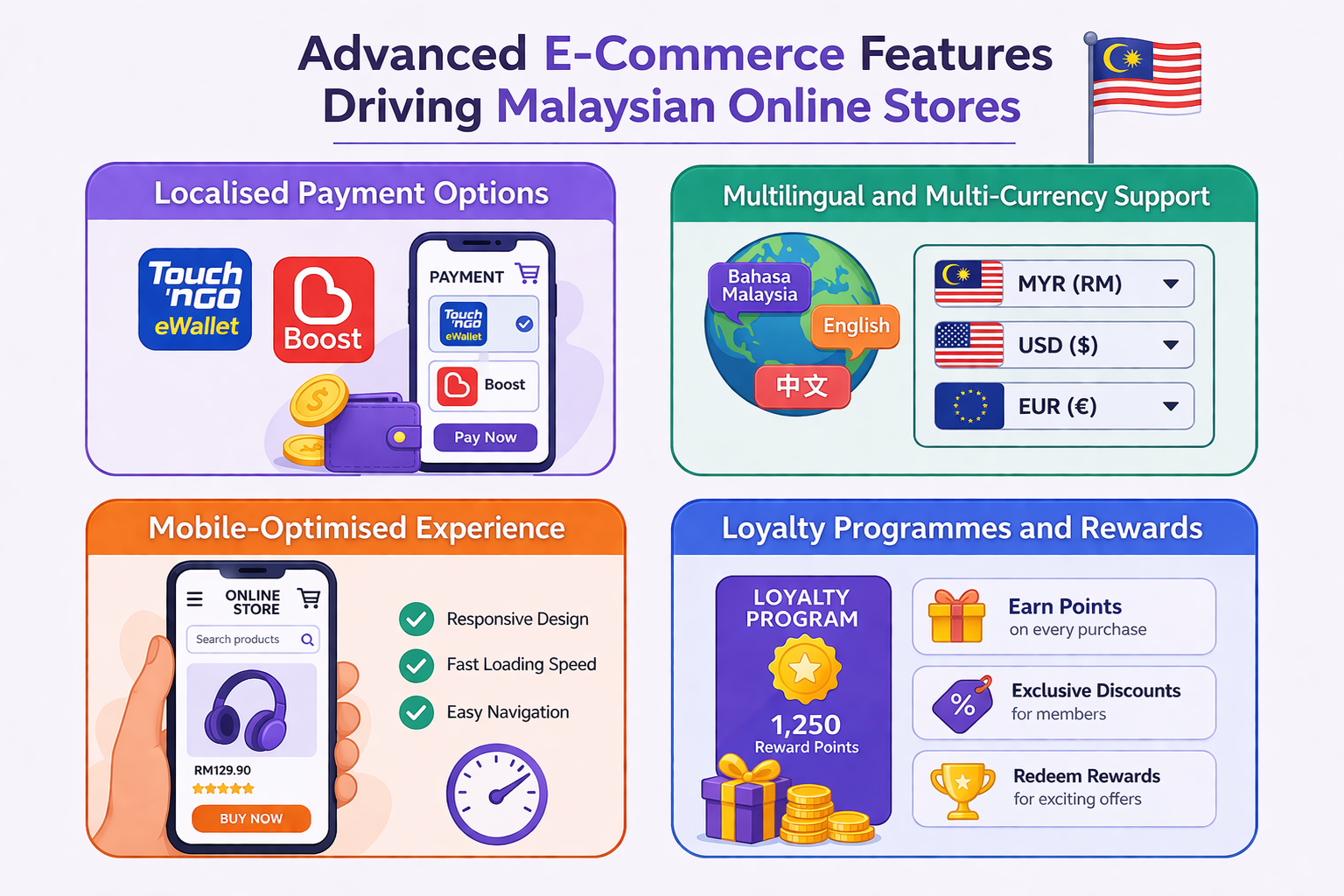
These advanced features demonstrate how ecommerce in Malaysia is evolving with customer expectations and technological trends. Businesses embracing these tools can maximise both the advantages of online business and long-term revenue potential.
For businesses operating in Malaysia, understanding local trends is crucial. According to the Malaysia Digital Economy Corporation (MDEC), the country's e-commerce sector is experiencing rapid growth, with more consumers opting for online shopping for convenience and variety. Staying informed about local market insights allows businesses to prioritise the most effective features of e-commerce, from mobile optimisation to localised payment gateways, ensuring your store meets the expectations of Malaysian shoppers.
Key Benefits of Implementing Strong E-Commerce Features
Investing in the right e commerce features provides measurable benefits for your online business:
Increased Sales - Streamlined navigation, personalised recommendations, and optimised checkout processes directly boost revenue.
Improved Customer Experience - Features like responsive design, secure applications, and intuitive product catalogues enhance satisfaction.
Operational Efficiency - Automation in inventory management, reporting, and promotions reduces manual workload.
Market Expansion - Scalable platforms and cloud-based solutions allow businesses to reach new regions effortlessly.
Data-Driven Decisions - Analytics tools offer insights that enable smarter strategies for marketing, inventory, and customer engagement.
Overall, these benefits of ecommerce and online business benefits make investing in comprehensive features of ecommerce a necessity rather than an option.
The advantages of online business are not limited to local markets. The World Bank E-Commerce Insights show that e-commerce enables businesses to expand their reach, reduce operational costs, and make data-driven decisions worldwide. Leveraging ecommerce platform features such as analytics tools, secure applications, and scalable infrastructure ensures your online store can compete effectively and maximise the benefits of ecommerce on a global scale.
Driving Your Online Business Forward
Building a successful online store requires more than simply listing products online. Understanding what are the features of e-commerce that influence customer behaviour and strategically implementing them can significantly improve your store's performance. From secure applications and payment gateway integration to scalability and advanced analytics, each feature contributes to stronger customer trust, higher conversion rates, and long-term growth.
If you are ready to optimise your online store with the most effective ecommerce platform features, Trinergy Digital can help. Our team specialises in software development and creating scalable, secure, and user-friendly e-commerce solutions tailored to your business needs.
Contact Trinergy Digital today to transform your online business and unlock the full potential of your e-commerce platform.