


Introduction to AI Agents for Business
AI agents for business are transforming how organisations operate by enabling smarter and faster decision making. From handling repetitive tasks to managing complex workflows, these intelligent systems are becoming essential for companies aiming to scale efficiently. As businesses in Malaysia and globally continue to embrace digital change, AI automation tools are no longer optional but a core part of modern strategy.
At Trinergy Digital, we see a growing demand for business automation AI solutions that integrate seamlessly into existing systems. Whether you are a startup or an enterprise, adopting AI workflow automation can help you reduce operational costs and improve productivity. In this article, you will learn what AI agents are, how they function, and how real businesses are using them today.
What Are AI Agents
AI agents are software systems that can perform tasks autonomously by analysing data, making decisions, and executing actions. Unlike traditional automation tools that follow fixed rules, AI agents adapt based on input and outcomes. This makes them far more flexible and powerful.
In simple terms, an AI agent acts like a digital assistant for business operations. It observes what is happening, processes information, and takes action to achieve a specific goal.
Key characteristics of AI agents
They operate independently with minimal human input
They learn from data and improve over time
They can interact with users' systems or other software
They make decisions based on predefined goals
For example, an AI chatbot automation system can handle customer enquiries without human involvement. Over time, it learns from interactions and provides more accurate responses, improving customer experience.
How AI Agents Work in Business Environments
Understanding how AI agents work is key to unlocking their value. These systems rely on a combination of data processing, machine learning, and automation frameworks.
Step by step process of AI agent operation
Data collection
AI agents gather data from multiple sources such as customer interactions, internal systems, or external platformsData analysis
They analyse this data using algorithms to identify patterns trends or anomaliesDecision making
Based on insights, the agent determines the best course of actionTask execution
The agent performs the required task such as sending emails updating records or triggering workflowsContinuous learning
The system improves over time by learning from outcomes and feedback
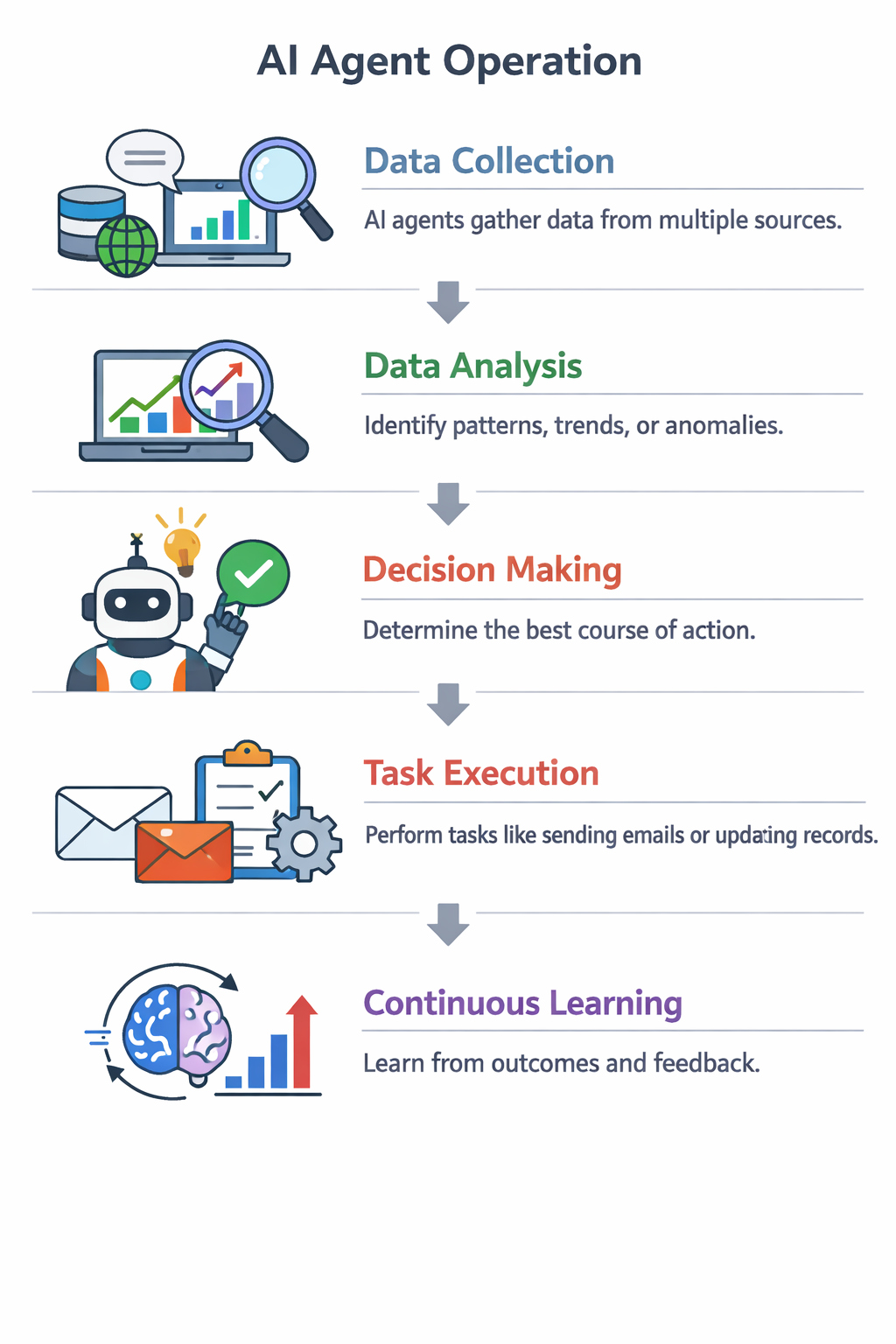
This process enables AI process automation that goes beyond simple task execution. It allows businesses to implement intelligent automation tools that respond dynamically to changing conditions.
Key Components of AI Workflow Automation
To successfully implement AI workflow automation, you need to understand its core components. These elements work together to deliver efficient and scalable AI business solutions.
Core components
Data infrastructure
Reliable data sources are essential for accurate decision makingMachine learning models
These models enable AI agents to learn and adaptIntegration capabilities
AI integration services connect agents with existing business systems such as CRM or ERP platformsUser interfaces
Dashboards or chat interfaces allow users to interact with AI systems easilyAutomation engines
These engines execute tasks and manage workflows across systems
Businesses that invest in these components can create powerful AI operations automation systems that streamline processes and improve performance.
Benefits of AI for Companies
AI for companies offers a wide range of benefits across industries. From improving efficiency to enabling innovation, AI digital transformation is reshaping how organisations compete.
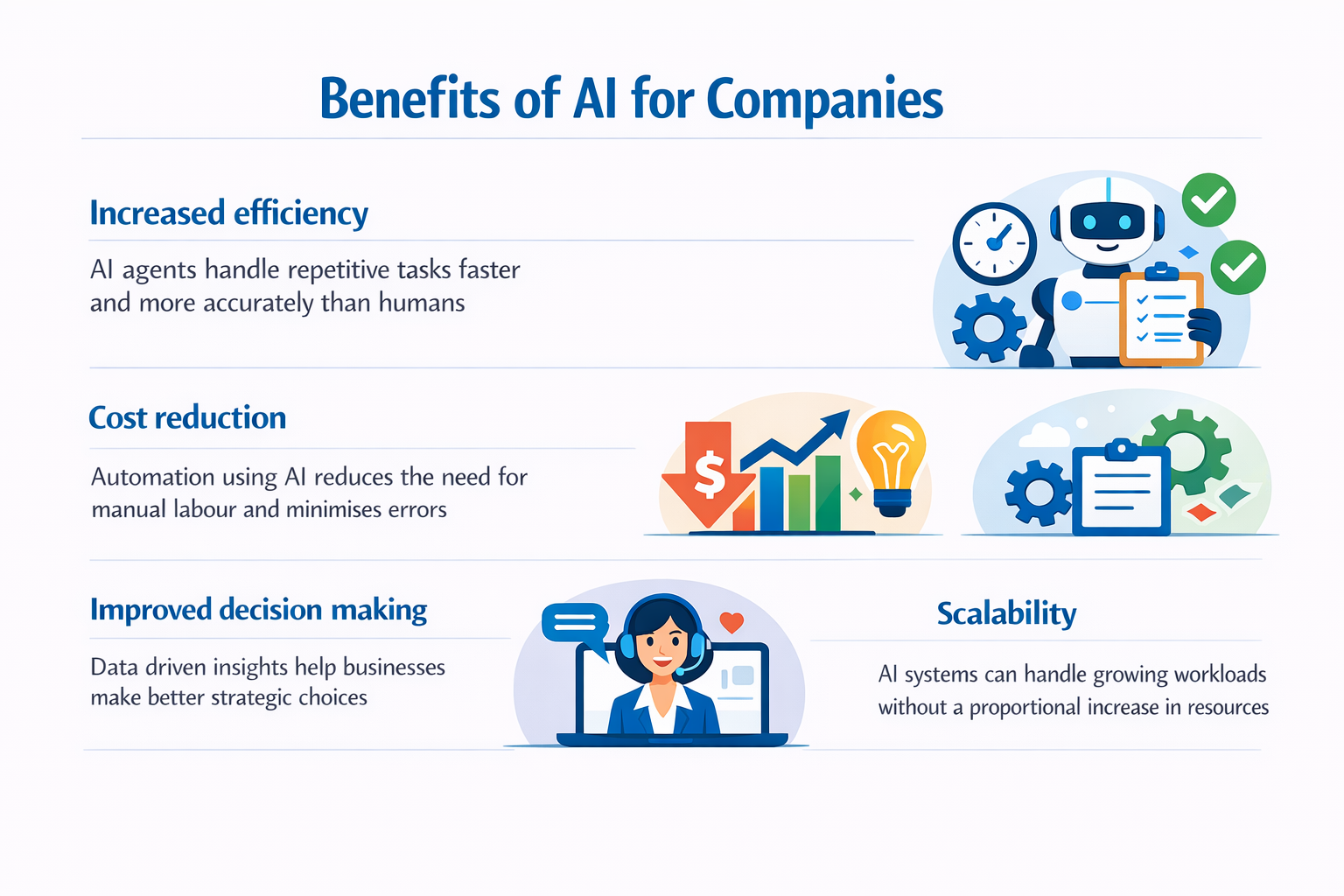
Key advantages
Increased efficiency
AI agents handle repetitive tasks faster and more accurately than humansCost reduction
Automation using AI reduces the need for manual labour and minimises errorsImproved decision making
Data driven insights help businesses make better strategic choicesEnhanced customer experience
AI assistant for business tools provides faster and more personalised serviceScalability
AI systems can handle growing workloads without a proportional increase in resources
A recent trend shows that companies adopting enterprise AI solutions report significant improvements in productivity and operational efficiency. This highlights the importance of integrating AI into your long-term AI strategy for business.
Real World AI Agent Examples
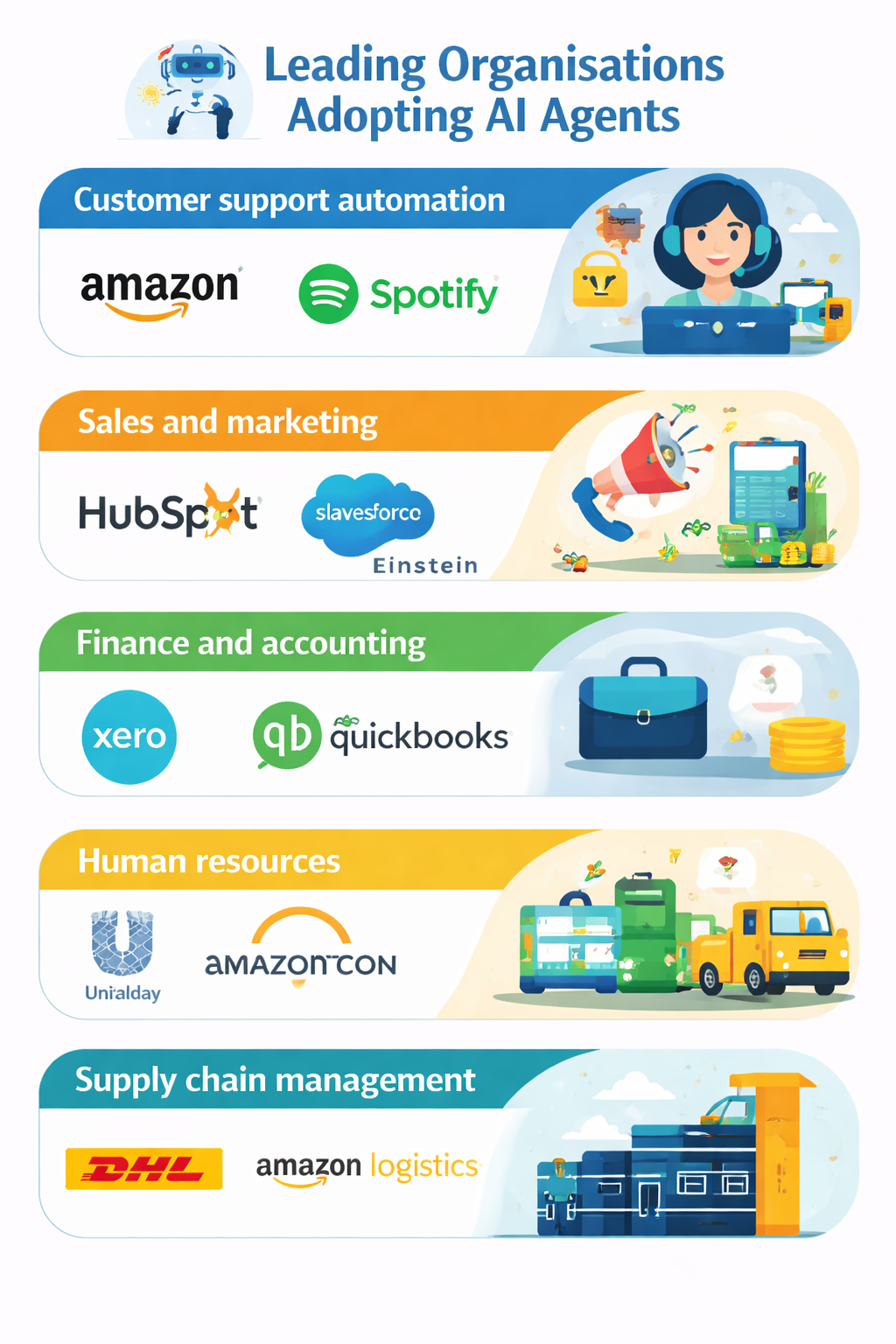
Many organisations are already using AI agent examples to drive innovation and efficiency. These use cases demonstrate how AI use cases in business can be applied across different sectors.
Customer support automation
Companies like Amazon and Spotify use AI-powered customer service systems and chatbots to handle large volumes of enquiries. Amazon's AI support tools help resolve order issues, refunds, and delivery tracking without human intervention in many cases.
Sales and marketing
Platforms such as HubSpot and Salesforce Einstein use AI to analyse customer behaviour, predict lead quality, and recommend the best marketing actions. This helps businesses improve conversion rates and personalise campaigns at scale.
Finance and accounting
Tools like Xero and QuickBooks use AI features for automating invoice processing, expense categorisation, and anomaly detection. Large enterprises also use AI-driven fraud detection systems in banking, such as those deployed by JP Morgan Chase.
Human resources
Companies like Unilever use AI in recruitment to screen CVs and assess candidates through digital assessments. AI-driven HR platforms like Workday help streamline hiring, onboarding, and employee analytics.
Supply chain management
DHL and Amazon Logistics use AI for demand forecasting, route optimisation, and inventory management. These systems help reduce delays and improve delivery efficiency across global networks.
As more companies embrace intelligent automation tools, the role of AI agents will continue to expand. In the next section, we will explore deeper implementation strategies and how your business can successfully integrate AI into daily operations.
Implementing AI Agents in Your Business
Adopting AI agents for business requires a clear and structured approach. While the benefits are significant, successful implementation depends on aligning technology with your operational goals. Businesses that rush into automation using AI without a strategy often face integration challenges and limited results.
Step by step approach to implementation
Identify business needs
Start by analysing your current processes. Look for repetitive tasks or areas where delays occur. These are ideal opportunities for AI process automationDefine clear objectives
Decide what you want to achieve. This could include reducing response times improving accuracy or lowering operational costsChoose the right tools
Select AI automation tools that match your needs. This may include AI chatbot automation platforms workflow systems or enterprise AI solutionsIntegrate with existing systems
Use AI integration services to connect your AI agents with CRM ERP or internal platforms. Seamless integration ensures consistent data flowTrain and test
Before full deployment train your AI agents using real data. Test them in controlled environments to ensure accuracy and reliabilityMonitor and optimise
Track performance metrics and continuously refine your system. AI workflow automation improves over time when regularly updated
A structured implementation plan ensures that your AI business solutions deliver measurable results rather than isolated improvements.
Common Challenges and How to Overcome Them
Despite the advantages, businesses often face challenges when adopting AI for companies. Understanding these barriers helps you prepare and mitigate risks effectively.
Key challenges
Data quality issues
AI agents rely on accurate data. Poor quality data leads to unreliable outputsIntegration complexity
Connecting AI systems with legacy platforms can be technically demandingHigh initial investment
Implementing AI digital transformation may require upfront costs for tools and infrastructureSkills gap
Many organisations lack the expertise needed to manage intelligent automation toolsChange resistance
Employees may hesitate to adopt new systems due to fear of disruption
Practical solutions
Invest in data management practices to ensure clean and structured data
Work with experienced partners offering AI integration services
Start with small pilot projects before scaling
Provide training programmes to upskill your team
Communicate the benefits clearly to encourage adoption
Industry research consistently shows that organisations that approach AI strategy for business with a phased rollout are more likely to achieve long term success. This highlights the importance of planning rather than rushing implementation.
The Role of AI in Digital Transformation
AI plays a central role in modern digital transformation initiatives. It enables businesses to move beyond basic automation towards fully intelligent systems that adapt and evolve.
AI digital transformation is not just about technology. It is about rethinking how your business operates. AI agents act as the foundation of this shift by enabling real time decision making and continuous optimisation.
How AI drives transformation
Automates complex workflows
AI workflow automation handles multi step processes with minimal human inputEnhances data utilisation
AI systems turn raw data into actionable insightsImproves agility
Businesses can respond quickly to market changes using AI driven insightsSupports innovation
AI opens new opportunities for products services and business models
A report by global consulting firms highlights that companies adopting business automation AI at scale often outperform competitors in efficiency and customer satisfaction. This reinforces the value of integrating AI into your long-term strategy.
Choosing the Right AI Business Solutions
Selecting the right AI business solutions is critical to achieving success. Not all tools are suitable for every organisation, so you need to evaluate options carefully.
Key factors to consider
Scalability
Choose solutions that can grow with your businessEase of integration
Ensure compatibility with your existing systemsCustomisation
Look for platforms that can adapt to your specific workflowsSecurity and compliance
Protect sensitive data and meet regulatory requirementsVendor expertise
Work with providers who have proven experience in AI for companies
At Trinergy Digital, we help businesses design tailored AI strategy for business initiatives. By combining technical expertise with industry knowledge, we deliver solutions that align with your operational goals.
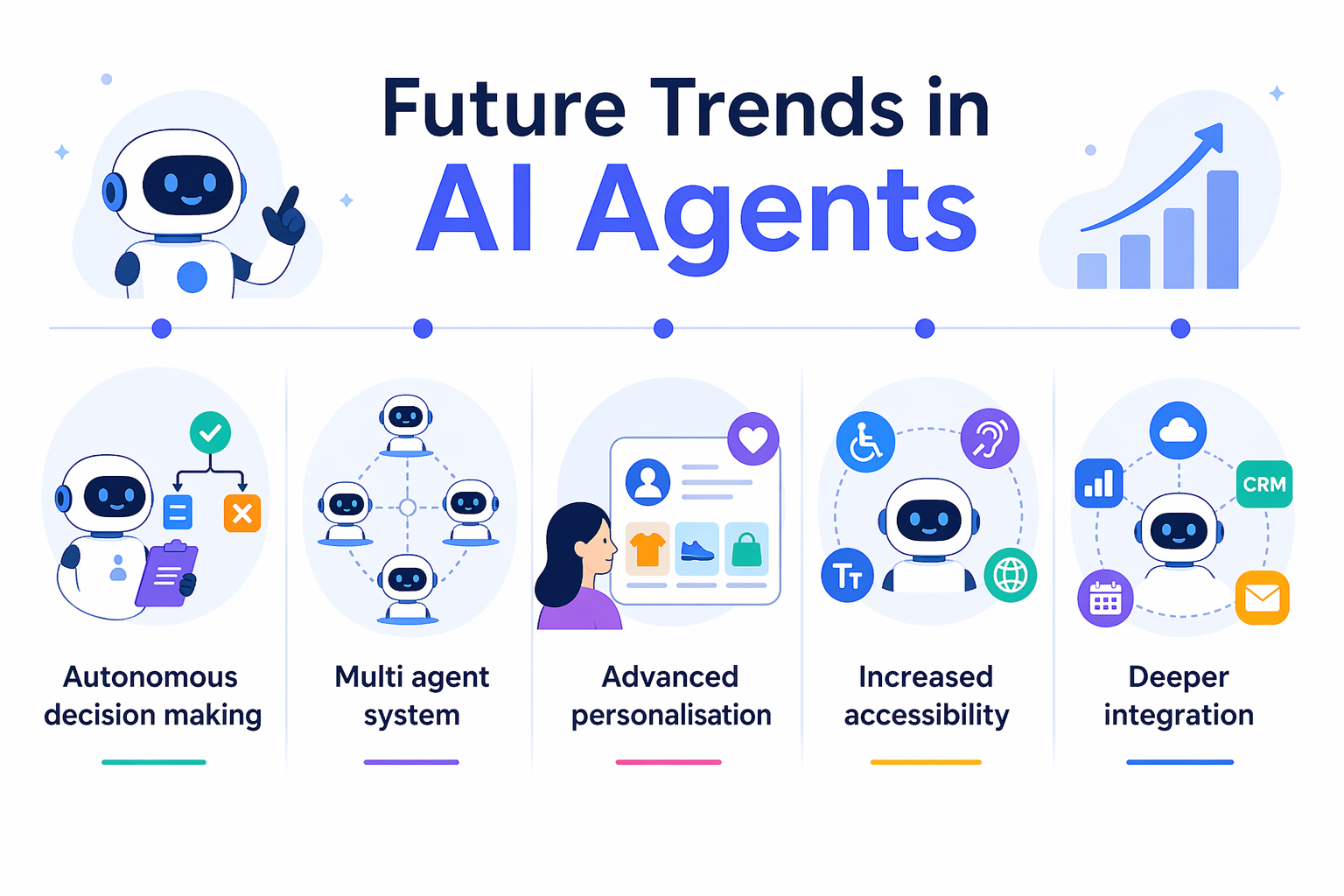
Future Trends in AI Agents
AI agents are evolving rapidly, and their role in business will continue to expand. Staying informed about emerging trends helps you remain competitive.
Key trends to watch
Autonomous decision making
AI agents will increasingly make complex decisions without human interventionMulti agent systems
Multiple AI agents will collaborate to manage entire workflowsAdvanced personalisation
AI assistant for business tools will deliver highly customised user experiencesIncreased accessibility
AI productivity tools will become more affordable for small businessesDeeper integration
AI operations automation will connect across all business functions creating unified systems
Experts predict that AI use cases in business will grow significantly over the next decade, with more organisations adopting enterprise AI solutions as part of their core operations. This makes early adoption a strategic advantage.
Bringing AI Into Your Business Strategy
To fully benefit from AI agents, you need to embed them into your overall business strategy. This means aligning AI initiatives with your long-term objectives rather than treating them as standalone projects.
Start by identifying high impact areas where AI can deliver immediate value. Then expand gradually across departments. This approach ensures sustainable growth and maximises return on investment.
AI is not just a tool but a capability that transforms how you operate. By investing in the right intelligent automation tools, you position your business for long term success in an increasingly digital world.
Moving Forward with AI Driven Growth
AI agents for business are no longer a future concept. They are a practical solution that helps you streamline operations improve decision making and enhance customer experiences. By understanding what AI agents are and how they work, you can make informed decisions about adopting AI business solutions.
Whether you are exploring AI chatbot automation or implementing full scale AI workflow automation, the key is to start with a clear strategy and scale gradually. With the right approach, AI can become a powerful driver of growth and innovation for your organisation.
If you are ready to explore how AI can transform your operations, contact Trinergy Digital today to speak with our team and discover tailored AI solutions for your business.