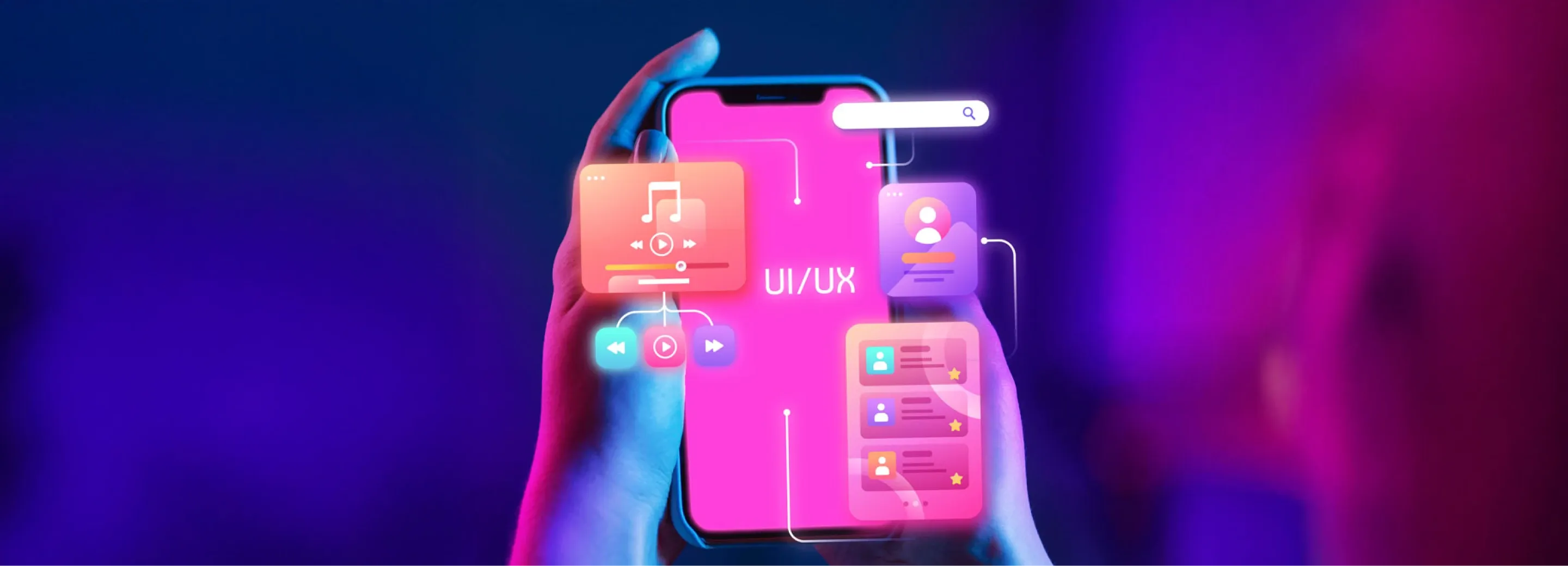


Why design-led experiences are winning the digital game
Let’s be honest. Most “trend” lists are recycled noise. Glassmorphism, neo-brutalism, dark mode... yes, we’ve all heard of them. But what really matters in 2025? What’s actually shaping how users interact, convert, and stick around?
At Trinergy Digital, we design, build, and battle-test digital products daily. This list isn’t theory. It’s what we’re implementing for clients right now across apps, platforms, and brand experiences. It’s the future of UI/UX with one foot firmly in the present.
So, if you’re a decision-maker, marketer, or tech-savvy business owner wondering what’s next, read on. These are the trends worth watching and acting on.
1. Adaptive Interfaces: One Experience, Multiple Personalities
Static interfaces are out. In 2025, digital products are expected to respond, not just display.
Think interfaces that adapt not only to screen size but to user intent, behaviour, and context. Whether it’s a first-time visitor or a power user, your platform should shape-shift accordingly. Netflix and Spotify have set the bar with behaviour-driven layouts. Now, even fintech dashboards and B2B platforms are catching up.
The real winners? Brands that use micro-segmentation and artificial intelligence (AI) to serve different journeys to different users, all in real-time.
Pro tip: Start small. Even personalised onboarding or predictive search suggestions can make a big impact.
2. UX Writing Becomes a Strategic Asset
We’ll say it louder for the folks at the back: words are part of the design.
In 2025, brands are finally treating UX writing as more than placeholder copy. From error states to call-to-action buttons, microcopy is becoming smarter, friendlier, and more aligned with voice and tone.
A well-written tooltip can save a support ticket. A confused label can cost you conversions.
What we’re doing: At Trinergy, we’re integrating UX writers early in sprints alongside designers and developers to craft experiences that read as well as they work.
3. Designing for Trust: The New Currency
Trust has always mattered. But in a post-AI, deepfake-aware world, users are demanding transparency, clarity, and ethical design.
This means decluttering deceptive UI (dark patterns, we see you), clearly explaining AI decisions (“This price was generated by an algorithm”), and making permissions obvious and respectful.
Design in 2025 isn’t just about what users can do, but whether they feel safe doing it.
Why it matters: If users don’t trust your app, they won’t use it. Period.
4. Zero UI: The Interface That’s Not There
Here’s the twist: the best interface might be... no interface.
Voice, gestures, biometrics, and ambient computing are all driving a rise in Zero UI in 2025, where interactions happen beyond screens. Think voice commands in banking apps, motion-triggered kiosks, or smart assistants that anticipate needs before users ask.
No, your website doesn’t need to be Alexa-ready overnight. But designing for minimal cognitive load, low-friction actions, and assistive technologies? That’s where we’re headed.
Keep in mind: Every invisible UI still needs thoughtful UX beneath it. Invisible doesn’t mean careless.
5. DesignOps Goes Mainstream
Here’s one for the inside baseball crowd: DesignOps is finally getting its due.
As digital teams scale, the need for consistent, efficient, and high-quality design across multiple touchpoints has never been greater. In 2025, more companies will be building internal design systems, using component libraries, and automating review cycles.
DesignOps is the glue between creativity and scalability. It’s what lets teams ship faster without sacrificing quality or brand integrity.
Real-world win: One of our enterprise clients cut design review time by 40% after implementing a unified DesignOps toolkit. Small change, big impact. Especially when speed and consistency matter most.
6. Emotional Design: Beyond Utility
Form follows function, but feelings follow form.
In an oversaturated digital world, emotionally intelligent design is rising. This means interfaces that express empathy, celebration, humour, and even sadness when appropriate. Think Duolingo’s cheeky encouragement or apps that adapt tone based on user emotion (yes, that’s real now).
Designing for emotion = designing for retention. Users remember how your product made them feel more than what it let them do.
What to do: Map emotion into your user journey. Retention lives in the little moments that spark joy.
7. Sustainable UX: Green is the New Black
Data centres pollute. Apps drain batteries. Auto-play videos waste bandwidth.
As users become more eco-conscious, sustainable design is no longer optional. In 2025, smart UX is also green UX: fewer animations, compressed assets, lazy loading, and minimal tracking. Not only is this better for the planet, but it also makes your site faster and your UX smoother.
Brands that optimise for sustainability are winning user goodwill and page speed scores.
Bonus: Leaner UX is great for SEO too. Google loves lean, fast, user-first experiences.
8. AI-Augmented Design: Your Co-Pilot, Not Your Replacement
No, AI won’t replace designers, but designers who use AI might replace those who don’t.
We’re not just talking about generating colour palettes or lorem ipsum. In 2025, AI tools now suggest layouts, write UX copy, and test usability.
AI won’t design your next app end-to-end. But it will help your team get there faster, iterate smarter, and catch things humans miss.
How we use it: At Trinergy, we pair AI tools with human oversight. Using machine suggestions as a jump-off point, never a finish line.
9. The Death of the Generic Dashboard
In the past, every dashboard looked like Excel in drag. Now? It’s time for role-based, goal-driven dashboards that make sense at a glance.
In 2025, we’re designing with context in mind. A CFO and a customer support agent shouldn’t see the same metrics. Interfaces are becoming modular, prioritised by task relevance, not a data dump.
Less clutter, more action. Dashboards that drive decisions, not confusion.
Tip: Give users control to customise their own views, but start them off with intelligent defaults.
10. Inclusive Design Is Just Good Design Now
This shouldn’t even be a trend, but here we are.
Accessibility and inclusivity are finally being treated as core to the UX process, not tacked on as an afterthought. From colour contrast and keyboard navigation to cultural sensitivity and neurodiversity-aware flows, inclusive design is maturing.
If the access is limited, so is the impact.
What to audit: Are your forms screen reader–friendly? Is your tone welcoming across languages and literacy levels? Does your design assume too much? Inclusion starts with asking better questions.
The Takeaway: 2025 is All UX Grown Up
Design in 2025 is less about hype, more about depth. It’s about design that flexes with user needs, respects their time and trust, and works invisibly in the background to make interactions feel effortless.
We’ve moved past just “making it look good.” Now, it has to work, feel, and evolve even better.
At Trinergy Digital, we’re not just watching these shifts. We’re building with them. Whether you’re launching a new product or rethinking a legacy platform, now’s the time to design with 2025 in mind.
TL; DR 10 Trends in a Nutshell
-
Adaptive interfaces personalise the experience in real-time.
-
UX writing is finally treated as critical to clarity and conversion.
-
Designing for trust means transparency is baked into the UI.
-
Zero UI shifts interaction beyond screens. Think voice, gesture, ambient.
-
DesignOps makes scaling creativity possible.
-
Emotional design adds delight and builds brand affinity.
-
Sustainable UX is good for users and the planet.
-
AI-assisted design supercharges teams not replaces them.
-
Smarter dashboards show the right data to the right people.
-
Inclusive design is non-negotiable and good business.
Ready to rethink your product with these trends in mind?
Let’s chat. Trinergy Digital builds with tomorrow in mind.



